
International Doctors' Day: Thank You to Those Who Make Every New Beginning Possible

Have you ever stopped to think how many times a doctor has been present at the most important moments of your life? From a diagnosis that changed the course of a decision to the news that filled a home with joy, behind many stories there is someone who chose to devote their life to caring for others.
On the Ingenes blog we want to take International Doctors’ Day as an opportunity to recognize that work and tell you why their role is so special when it comes to building a family.
A date to give thanks: the origin of Doctors’ Day
Some professions are lived as a trade and others as a calling. Medicine usually falls into the second group, because it involves years of study, constant updating and, above all, the daily decision to put other people’s wellbeing at the center.
That is why there are dates devoted to recognizing this work. In much of Latin America, International Doctors’ Day is celebrated on December 3 in honor of the Cuban physician Carlos Juan Finlay, who identified the mosquito as the carrier of yellow fever. His discovery changed the way this disease was understood and prevented. In Mexico, Doctors’ Day is also celebrated on October 23, a date we marked in our post Doctors’ Day: Science, Experience and Listening in Reproductive Medicine.
Finlay presented his theory in 1881 and, for years, many colleagues met it with skepticism. Only later did other research confirm what he had proposed, and his work made it possible to control a disease that had caused thousands of deaths across the continent. His story is often remembered as an example of scientific perseverance: observing patiently, backing an idea with evidence and continuing to investigate even when the answer is slow to arrive.
And although we tend to associate doctors with hospitals and emergency rooms, their work is also present in moments full of hope, such as the wish to become a mother or a father.
Beyond the white coat: science, vocation and empathy
When we think of a good doctor, the first thing that usually comes to mind is their knowledge. And rightly so: medicine rests on scientific evidence, clinical experience and the ability to interpret what each test reveals.
However, knowledge is only part of the story. A diagnosis can be accurate and still need to be explained with clarity, patience and sensitivity. Because on the other side of the desk there is a person with doubts, fears and expectations.
That is why empathy is also part of practicing medicine. Listening carefully, answering questions without rushing and respecting each patient’s pace can make a big difference in how a treatment is experienced.
That difference shows in concrete details. A doctor who translates a result into plain words helps the patient understand what is happening in her body. One who asks how she feels, beyond what symptoms she has, opens space to talk about what weighs on her. And one who acknowledges when something doesn’t have an answer yet builds a trust that carries through the whole process.
Add to this something that is rarely seen: constant updating. Medical science advances every day, and keeping up with new techniques, studies and protocols is part of the commitment to each patient. Conferences, courses, reviewing recent research and sessions with colleagues are part of many specialists’ routine, even though they are almost never visible from the consulting room.
Remember that behind every consultation there are hours of preparation, careful decisions and a deep sense of responsibility that isn’t always noticed, but is always there.

Behind every consultation there are hours of preparation and training that are almost never seen
Doctors who accompany dreams: the view from reproductive medicine
If there is one field where science and emotion coexist every day, it is reproductive medicine. Here, every test, every protocol and every medical decision is tied to a very deep wish: to start a family.
Beyond analyzing hormone results or evaluating how an embryo develops, fertility specialists walk alongside people who, in many cases, have spent months or even years trying to find an answer.
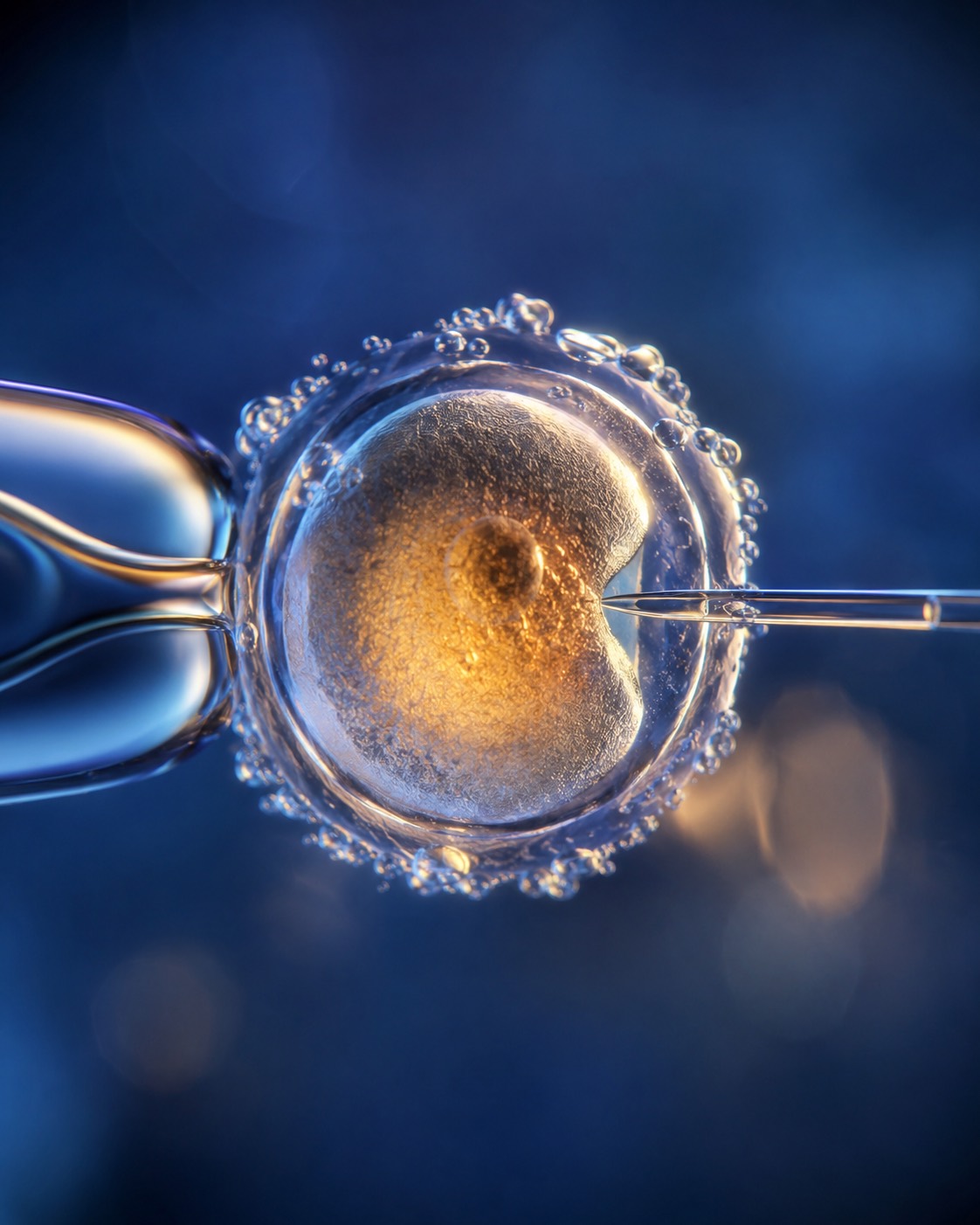
That is why their work goes far beyond a procedure. It means understanding each patient’s history, reviewing previous treatments and building a personalized strategy. Processes as delicate as embryo implantation require technical precision, but also clear, close communication.
In few specialties does waiting weigh so heavily. Between a transfer and a result, days can pass that feel endless, and in that time a call, an explanation or a calming word from the medical team can make the road easier. The same is true when a result isn’t what was hoped for: how it is communicated and the plan built afterward shape how the patient experiences the next step.
As you can see, in reproductive medicine the human touch is an essential part of the treatment.
No achievement is individual: the value of a multidisciplinary team
Behind every fertility treatment there is a whole team. Reproductive medicine specialists, embryologists, gynecologists, urologists, nurses, psychologists and laboratory staff work in a coordinated way so that each stage unfolds with care.
Each one contributes a different piece. While some focus on diagnosis, others look after the development of embryos in the laboratory or support the emotional side that so often runs through this process.
At Ingenes we believe this comprehensive view is what makes it possible to understand each case from different angles. That is why our specialists work together to offer personalized, close care.
On this International Doctors’ Day, we want to recognize every member of this team. Those who review a test one more time before giving an answer, those who patiently explain what seems complicated, and those who celebrate, together with each patient, the arrival of a new life.
Because every family that comes into being is also the result of many hands that worked with dedication.
Frequently asked questions
When is International Doctors’ Day celebrated?
On December 3, in honor of the birth of the Cuban physician Carlos Juan Finlay, who identified the mosquito as the carrier of yellow fever. The date was established by the Pan American Medical Confederation in 1953.
Is it the same date as Doctors’ Day in Mexico?
No. In Mexico, Doctors’ Day is celebrated on October 23, commemorating the opening of the Establishment of Medical Sciences in 1833. December 3 is the date shared by much of Latin America.
What does a reproductive medicine specialist do?
They evaluate both the woman and the man, interpret the tests as a whole and build a personalized strategy to achieve a pregnancy. Their work includes explaining each step clearly and supporting patients through the wait between one stage and the next.
Who else takes part in a fertility treatment?
Besides the doctor, embryologists, nurses, psychologists, laboratory staff and, when needed, gynecologists and urologists. Each one looks after a part of the process.
A calling that walks beside you
International Doctors’ Day is an opportunity to look beyond the white coat and recognize everything behind it: years of preparation, careful decisions and a deep vocation for service.
In reproductive medicine, that vocation translates into something very special: accompanying people through one of the most important wishes of their lives. Sometimes with answers, sometimes with patience, and always with the conviction that every story deserves to be heard.
We know that taking the first step can raise doubts, but you don’t have to take it alone. Schedule your first consultation and let our specialists walk with you, with science, experience and warmth. Your story can start today.