

Sex Selection with
Eligender™
Eligender™ is Ingenes' exclusive sex selection technique. It identifies the embryo's sex before transfer with 98% effectiveness. Developed 100% in our own molecular biology lab.

Eligender™ is the sex selection technique developed 100% at Ingenes that identifies whether an embryo is female (XX) or male (XY) before transfer to the uterus. It is applied within an IVF cycle and allows families to balance their composition or avoid transmission of sex-linked hereditary diseases.
The analysis is done in our IVF Lab through advanced molecular biology techniques, on a minimal sample of the embryo (trophectoderm biopsy or free DNA from the culture medium, depending on medical recommendation). Without affecting embryo development, with 98% effectiveness.
2 out of 3 patients doing IVF at Ingenes want to know the sex of the embryo before transferring it. Eligender™ puts that information on the table with scientific backing, not intuition.
- 0% Technique effectiveness
- XX / XY Sex chromosome analysis
- 0% Developed at Ingenes
Why Eligender™ makes the difference
-
Exclusive Ingenes technique
Eligender™ was developed entirely by our Molecular Biology team, in academic alliance with Cinvestav-IPN. It is not an outsourced service: the sample is processed in our own labs.
-
Does not harm the embryo
The technique analyzes a minimal sample (trophectoderm biopsy or free DNA from the culture medium). The embryo continues its normal development and is vitrified for later transfer.
-
Useful clinical information
Beyond family balancing, Eligender™ allows ruling out serious sex-linked diseases (hemophilia, Duchenne muscular dystrophy, Fragile X, among others) before transfer.
Sex chromosomes: the basis of the technique
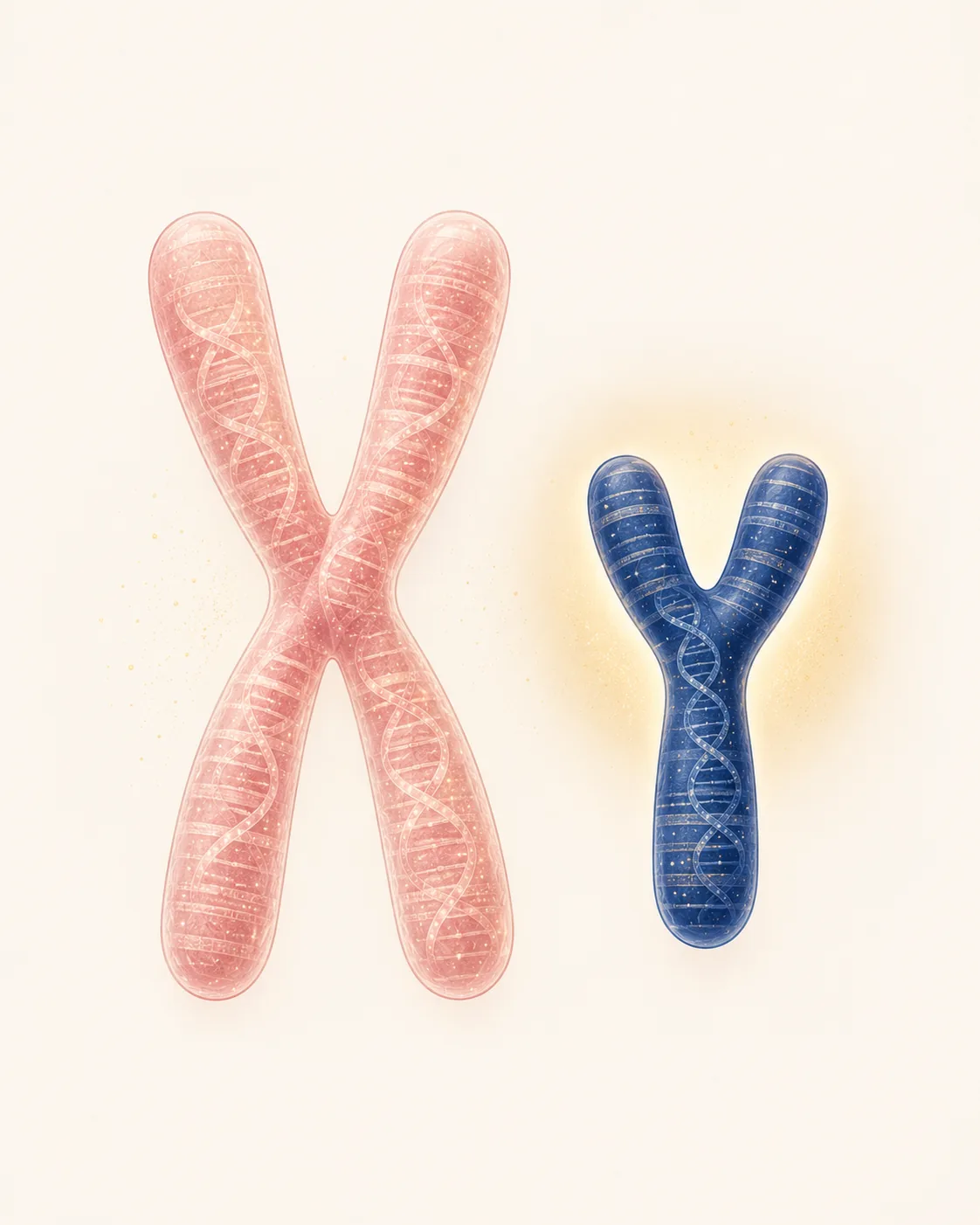
Each human cell has 23 chromosome pairs. Pair 23 defines biological sex: two X chromosomes in female embryos (XX), one X and one Y in male embryos (XY). Eligender™ focuses exclusively on analyzing the presence or absence of the Y chromosome to classify each embryo.
The study is done with specific molecular biology techniques, designed and validated by our research team. Precision is 98%, one of the highest reported in the literature for sex chromosome analysis in preimplantation embryos.
Eligender™ can be combined with PGT-A (analysis of all 23 chromosome pairs to rule out aneuploidies) in the same cycle. That way we select the embryo by sex and also guarantee full chromosomal integrity.
Cases where Eligender™ applies
-
Family balancing
Families that already have one or more children of the same sex and want to have a baby of the opposite sex to balance the family composition.
-
Prevention of sex-linked diseases
When there is family history of a genetic disease inherited linked to the X or Y chromosome, selecting the sex avoids transmission to the next generation.
-
Personal preference for the baby's sex
Patients who, for personal, cultural or emotional reasons, have a clear preference and want to transfer an embryo of the desired sex.
-
Second or third IVF
Couples who already completed their family with a first child by IVF and plan a next cycle choosing the sex of the new member.
-
Patients already doing IVF
If your plan already includes IVF for other reasons (male factor, age, ovarian failure, etc.), adding Eligender™ is a simple technical step within the same cycle.
-
After a pregnancy loss
Some families, after the loss of a child, choose Eligender™ as part of a new reproductive plan, whether to have a baby of the same sex or the opposite.
Your path is unique. So is your plan.
We design a protocol tailored to you after understanding your story and your previous tests. No generic diagnoses or protocols.
The procedure within the IVF cycle
1. Ovarian stimulation and egg retrieval. Same as a standard IVF cycle. The patient receives medication for 8 to 12 days so her ovaries produce several mature eggs, which are retrieved in an outpatient procedure.
2. Fertilization and embryo culture. The eggs are fertilized with sperm (IVF or ICSI/PICSI depending on the case) and the embryos are cultured until day 5 or 6, when they reach the blastocyst stage.
3. Sample collection. The embryologist takes a minimal biopsy of the trophectoderm (the outer layer that will form the placenta, not the baby) or collects free DNA from the culture medium, according to the treating physician's recommendation.
4. Molecular analysis. The sample is processed in our Molecular Biology Lab. Specific techniques detect the presence or absence of the Y chromosome, allowing classification of each embryo as XX or XY with 98% effectiveness.
5. Selection and transfer. With results in hand and the family's preference defined, the embryo to transfer is chosen. Embryos are vitrified and the transfer is performed in a later cycle with optimal endometrial preparation.


Sex-linked diseases Eligender™ helps avoid
-
Hemophilia A and B
X-linked coagulation disorders. They mainly affect males; women are usually asymptomatic carriers.
-
Duchenne muscular dystrophy
Progressive X-linked neuromuscular disease. Affects almost exclusively males, with onset in childhood.
-
Fragile X syndrome
Most common cause of hereditary intellectual disability. X-linked, predominantly affects males.
-
Adrenoleukodystrophy (ALD)
X-linked metabolic disease affecting the nervous system and adrenal glands, mainly in males.
-
Lesch-Nyhan syndrome
X-linked metabolic disorder with severe neurological involvement. Affects almost exclusively males.
-
Other X or Y-linked conditions
There are over 100 diseases linked to sex chromosomes. If there is an identified diagnosis in your family, we evaluate it at the First Consultation.
Eligender™ within the TripleMed™ model
Eligender™ is not applied as an isolated study. At Ingenes it is integrated into the IVF cycle within the TripleMed™ model, which combines reproductive medicine, genetic and regenerative medicine, and metabolic medicine in a single personalized plan.
That means your case is reviewed by a multidisciplinary team: reproductive physician, embryologist, molecular biologist specialized in sex chromosomes, regenerative specialist, and metabolic specialist. The decision to add Eligender™, PGT-A or both is made with shared clinical criteria, not by default.
We work with our own Molecular Biology lab and an academic alliance with Cinvestav-IPN, one of the most important genetic research centers in Mexico. That collaboration is what allowed us to develop Eligender™ entirely in-house, with validated and reproducible techniques.

Frequently asked questions about Eligender™
What is the difference between Eligender™ and PGT-A?
Eligender™ focuses exclusively on analyzing the sex chromosomes (X and Y) to determine whether the embryo is XX or XY. PGT-A analyzes all 23 chromosome pairs to rule out aneuploidies (like Down or Edwards Syndrome). They are different studies with different goals. They can be combined in the same IVF cycle if the case justifies it.
Does the sample collection harm the embryo?
No. The biopsy is taken from the trophectoderm (the outer layer that will form the placenta, not the baby) or free DNA is collected from the culture medium. It is a minimally invasive procedure, widely clinically validated, with no impact on subsequent embryo development.
How precise is the technique?
Eligender™ has 98% effectiveness in identifying the embryo's sex. It is one of the highest precisions reported for preimplantation sex chromosome analysis. The remaining 2% corresponds to exceptional cases where the sample does not allow a definitive conclusion, in which case it is discussed with the couple before any decision.
Is Eligender™ allowed in Mexico?
Yes. In Mexico, embryonic sex selection is legal and applied within an IVF cycle. At Ingenes we follow current ethical and clinical guidelines, and the decision is always made informed with the couple.
How long does the result take?
Between 5 and 10 days from sample collection. While waiting for the result, embryos are vitrified. The transfer is done in a later cycle with optimal endometrial preparation, which also improves uterine receptivity.
Does it guarantee a baby of the chosen sex?
For the analyzed embryo, effectiveness is 98%. But as in any IVF process, the final outcome also depends on a successful transfer and pregnancy evolution. What Eligender™ guarantees is the chromosomal information of the embryo before transferring it, not the clinical outcome of the pregnancy.
How much does adding Eligender™ to the IVF cycle cost?
It is an additional cost to the IVF cycle, depending on the number of embryos analyzed. We discuss it in detail at the First Consultation or during cycle planning, with concrete numbers based on your case.
Do you want to choose your baby's sex?
Eligender™ is applied within an IVF cycle. At the First Consultation we review your case and tell you if it is the right option for you, whether for family balancing or to prevent a sex-linked disease.
Contact us