

Assisted Hatching
This technique increases the chances of embryo implantation, one of the most important steps in Assisted Reproduction.
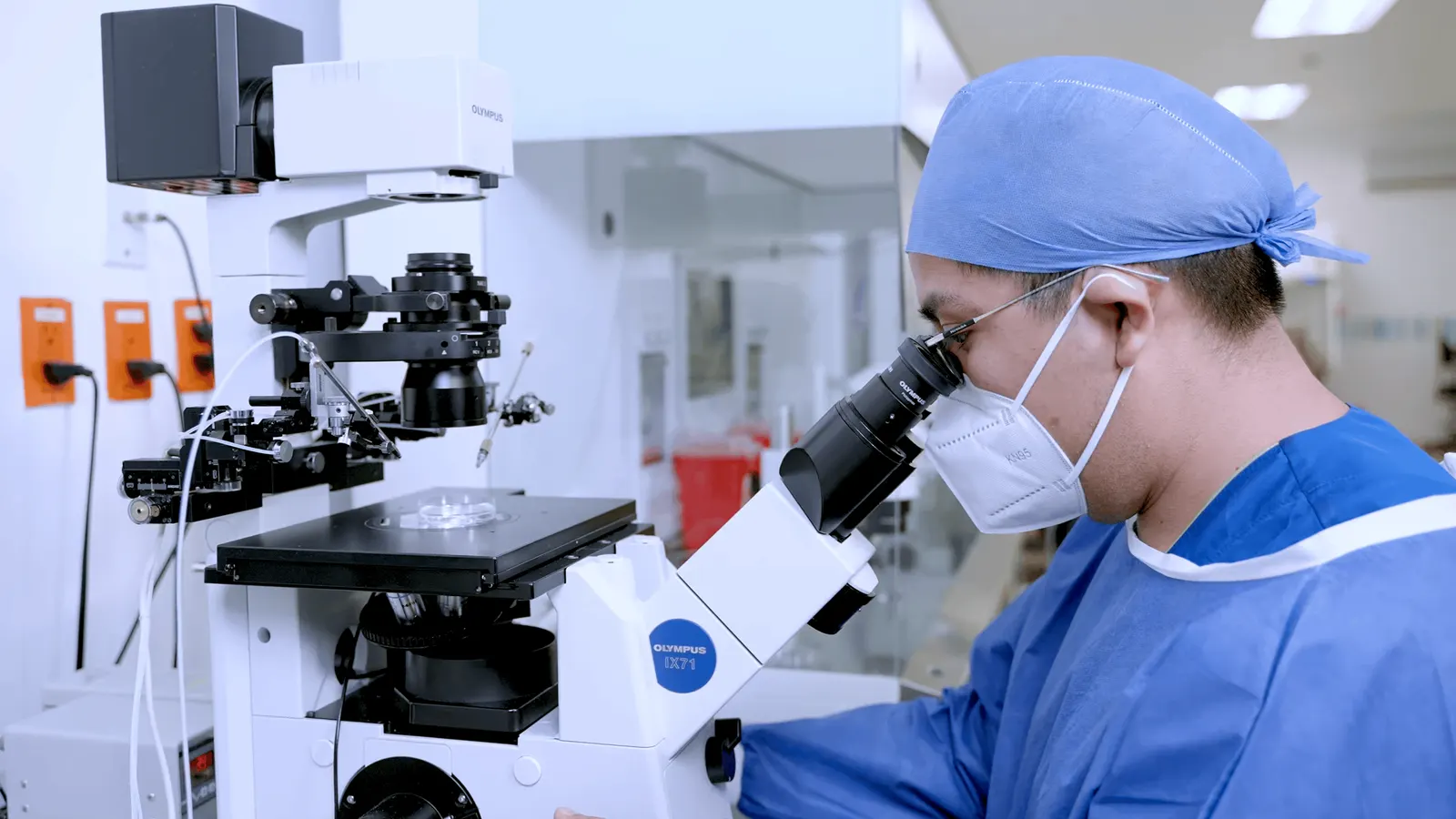
This technique increases the chances of embryo implantation, one of the most important steps in Assisted Reproduction.
What is Assisted Hatching?
Assisted Hatching is a complementary laboratory technique that can be performed on embryos in culture during In Vitro Fertilization (IVF) treatment.
Assisted Hatching is ideal for cases where the embryo fails to implant on its own.
This test is performed on embryos by making a small hole in the zona pellucida of the embryo, in the embryo’s shell, with the aim of facilitating the exit of the expanded blastocyst in a phenomenon known as hatching. Hatching aims to improve implantation rates.
Your path is unique. So is your plan.
We design a protocol tailored to you after understanding your story and your previous tests. No generic diagnoses or protocols.
Who is Assisted Hatching ideal for?
This laboratory technique is indicated for the following cases:
- Previous implantation failures.
- Patients over 37 years of age.
- Embryos with thickened, darkened zona pellucida or other abnormalities.
- Frozen embryos, because the zona pellucida tends to “harden”.
- Embryos with slow development or division and/or very fragmented.
The importance of Assisted Hatching
Assisted Hatching is an important step towards fulfilling your dream of becoming a mom
Want to know if this treatment is right for you?
We'll send you personalized information and a specialist will reach out within 24 business hours.
Contact us