

Preimplantation Genetic Testing
PGT‑M
PGT‑M (Preimplantation Genetic Testing for Monogenic disorders) detects specific genetic mutations inherited in the family, before transferring the embryo. It allows carriers to have healthy children without passing on the disease.

PGT‑M (Preimplantation Genetic Testing for Monogenic disorders) is a study that detects mutations in a specific gene inherited in the family, before transferring the embryo to the uterus. It is applied within an IVF cycle when one or both members of the couple carry a known genetic alteration that can be passed on to their children.
Unlike PGT‑A (which analyzes the number of chromosomes), PGT‑M searches for a point mutation in a previously identified gene. That is why it requires a prior informative study: the genetics lab characterizes exactly what the family mutation is, in order to look for it in the embryos.
At Ingenes we do PGT‑M integrated with PGT‑A chromosomal analysis in the same procedure. So besides discarding the specific mutation, we ensure the transferred embryo has chromosomal integrity.
- +0 Detectable hereditary diseases
- PGT‑M + PGT‑A Dual analysis in the same cycle
- 0 gene Specific mutation searched
Why it makes the difference for carrier families
-
Detects the specific family mutation
The lab identifies exactly the mutation you or your partner carry, and searches for it in every embryo. Only those that did not inherit it are transferred.
-
Personalized genetic counseling
Before and after the study you receive counseling with a clinical geneticist who explains the inheritance pattern, the real risks for your offspring, and the available options.
-
Integrated PGT‑M + PGT‑A analysis
In the same cycle we rule out the monogenic mutation (PGT‑M) and chromosomal aneuploidies (PGT‑A). Double genetic safety in a single procedure.
One mutation, one gene, one informed decision
Monogenic diseases are those caused by a mutation in a single gene. Some are autosomal dominant (inheriting the mutation from just one parent is enough to develop the disease, like Huntington). Others are autosomal recessive (it develops only if both parents transmit the mutation, like cystic fibrosis or sickle cell anemia). Others are X-linked (affecting mainly males, like Duchenne muscular dystrophy or hemophilia).
When there is a previous family diagnosis or a positive carrier study, couples have three main options: have children without testing and assume the transmission risk, do prenatal diagnosis after pregnancy, or use PGT‑M within an IVF cycle to select embryos free of the mutation before transfer. All three are valid; PGT‑M is the only one that avoids having to make decisions about an ongoing pregnancy.
The study is done with advanced molecular biology technology and specific probes designed for that mutation. That is why it requires prior preparation: it is not a generic analysis.
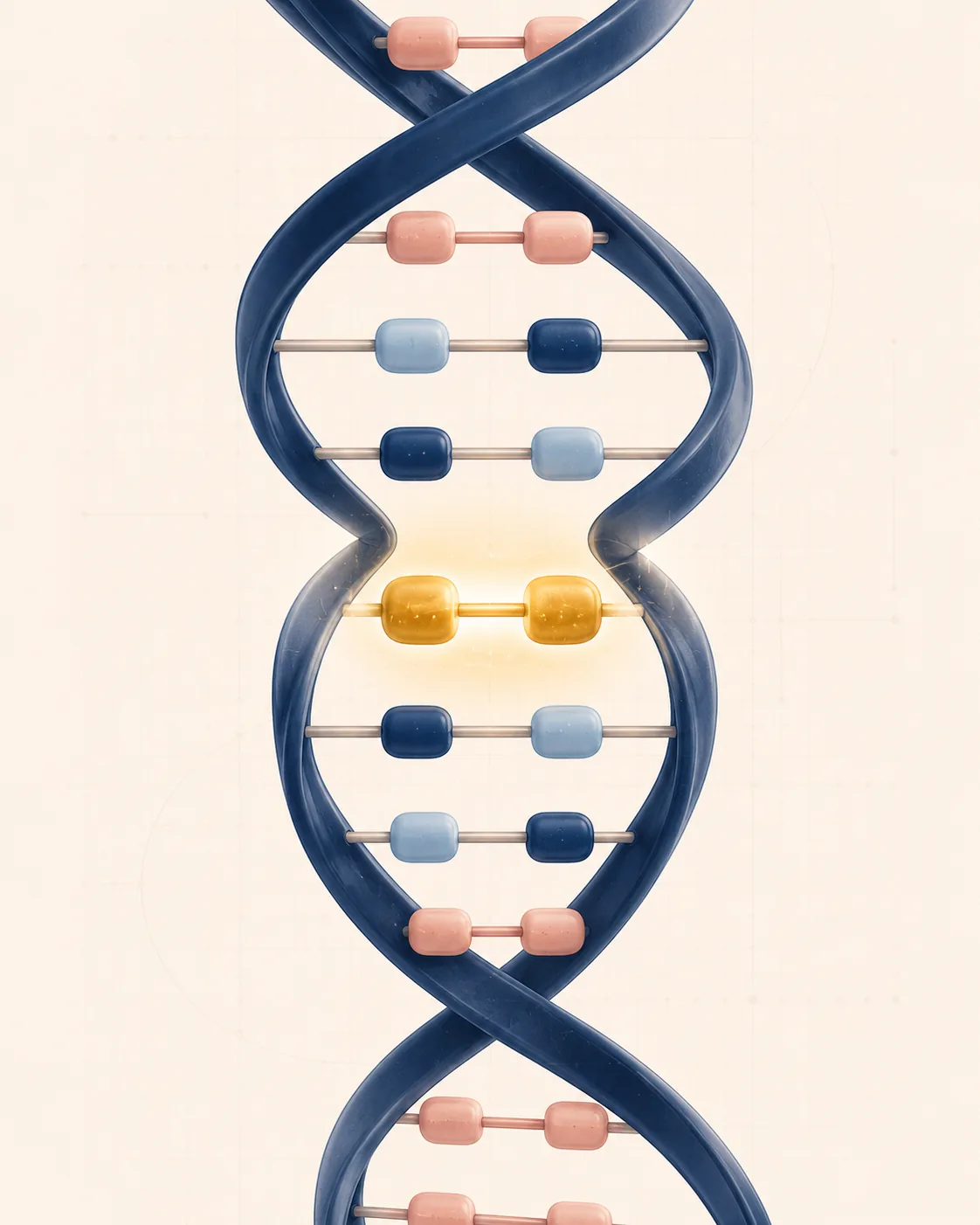
Profiles where PGT‑M is a clear clinical indication
-
Family history of hereditary disease
When there are documented antecedents of a monogenic disease in parents, siblings, or close relatives of the father or mother.
-
Previous child with genetic disease
Couples who already had a baby diagnosed with a hereditary disease and want to avoid passing it on in future pregnancies.
-
Both parents carriers
When prior genetic studies confirm that both members of the couple carry the same recessive mutation. The risk of transmission to the baby is 25% in each pregnancy.
-
Dominant mutation carrier
When one of the members carries an autosomal dominant mutation (Huntington, neurofibromatosis, etc.). The transmission risk is 50% in each pregnancy.
-
Balanced translocations
When one member carries a chromosomal rearrangement (balanced translocation or inversion). PGT‑M avoids transferring embryos with the unbalanced version.
-
Communities with consanguinity or elevated risk
Communities with high prevalence of specific mutations (Tay-Sachs in the Ashkenazi Jewish community, thalassemia in the Mediterranean, etc.) have frequent indication.
Your path is unique. So is your plan.
We design a protocol tailored to you after understanding your story and your previous tests. No generic diagnoses or protocols.
From the informative study to transfer
1. Prior informative study. Before the IVF cycle, the genetics lab characterizes the exact family mutation. This is done once per family and allows designing the specific probes to look for it in the embryos.
2. Initial genetic counseling. A clinical geneticist explains the inheritance pattern, the real risks, and the implications of the study. This is the moment to ask all the questions.
3. IVF cycle with embryo biopsy. Ovarian stimulation, retrieval, fertilization (with or without ICSI/PICSI), culture to blastocyst on day 5 or 6, and trophectoderm biopsy. Same procedure as PGT‑A.
4. Molecular analysis in the lab. The sample is analyzed with molecular biology techniques specific to the characterized mutation. In parallel, PGT‑A is performed to rule out aneuploidies.
5. Post-result genetic counseling. The geneticist explains which embryos are fit (free of the mutation and chromosomally intact) and which are not. Informed decision, with clinical backing.
6. Deferred transfer. Fit embryos are vitrified and transferred in a later cycle with optimal endometrial preparation.
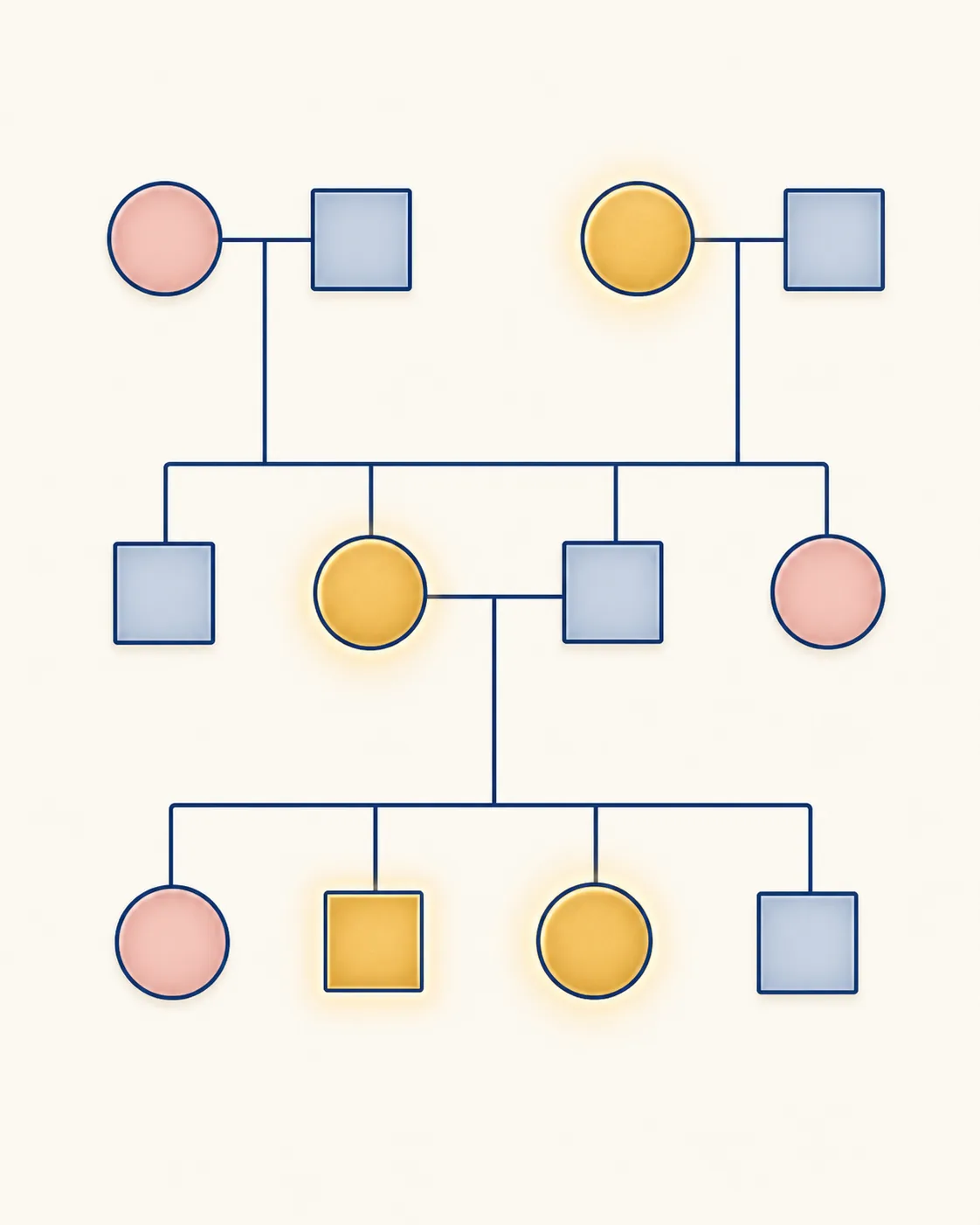

Some of the +180 diseases PGT‑M identifies
-
Cystic fibrosis
Autosomal recessive disease affecting lungs and digestive system. One of the most common PGT‑M indications in carrier couples.
-
Sickle cell anemia and thalassemia
Hereditary hemoglobin disorders. Frequent in communities with Mediterranean, African, or Middle Eastern ancestry.
-
Duchenne muscular dystrophy
X-linked disease affecting mainly males. PGT‑M allows selecting embryos free of the mutation.
-
Huntington's disease
Autosomal dominant neurodegenerative disorder. PGT‑M is especially valuable because it allows breaking the transmission chain without revealing the carrier result.
-
Fragile X syndrome
Most common cause of hereditary intellectual disability. X-linked, affects mainly males.
-
Tay-Sachs, hemophilia, Marfan and others
Tay-Sachs disease, hemophilia A and B, Marfan syndrome, neurofibromatosis, spinal muscular atrophy and many more. If your family disease has an identified gene, PGT‑M is most likely available.
PGT‑M within the TripleMed™ model
PGT‑M is not applied as an isolated study. At Ingenes it is integrated into the IVF cycle within the TripleMed™ model, which combines reproductive medicine, genetic and regenerative medicine, and metabolic medicine in a single personalized plan.
That means your case is reviewed by a multidisciplinary team: reproductive physician, embryologist, clinical geneticist specialized in counseling, regenerative specialist, and metabolic specialist. Genetic counseling before and after the study is a standard part of the process, not an extra service.
We work with our own molecular biology lab and an academic alliance with Cinvestav-IPN, one of the most important genetic research centers in Mexico. That collaboration allows us to characterize complex mutations and keep the study updated with the latest techniques.

Frequently asked questions about PGT‑M
What is the difference between PGT‑A and PGT‑M?
PGT‑A detects aneuploidies (alterations in the number of chromosomes, like Down or Edwards). PGT‑M searches for a specific genetic mutation linked to a known hereditary disease in the family (cystic fibrosis, Huntington, muscular dystrophy, etc.). They are different studies with different indications. At Ingenes we integrate them in the same cycle for double genetic safety.
What is the prior informative study?
Before doing PGT‑M in the IVF cycle, the lab needs to characterize exactly the family mutation. That is called an informative study and is done with a blood sample from the parents and, in some cases, from affected relatives. It is indispensable because PGT‑M is not a generic analysis: it searches for a specific mutation.
What happens with embryos that have the mutation?
They are embryos that carry the disease or are asymptomatic carriers depending on the inheritance pattern. The decision about what to do with them is discussed with the couple and the clinical geneticist, respecting their values within the current legal framework. There is no single right answer: it depends on each family.
Does it guarantee a baby without the family disease?
For the specific mutation analyzed, precision is very high (close to 99%). But PGT‑M does not analyze every possible genetic disease: only the one searched. That is why it is always complemented with standard prenatal follow-up (ultrasounds, Clarix™, amniocentesis if applicable).
How long does the result take?
The prior informative study can take 4 to 8 weeks (done once per family). PGT‑M itself, after the biopsy, takes 3 to 4 weeks. Embryos are vitrified and transferred in a later cycle with optimal endometrial preparation.
Can I do PGT‑M without known family history?
It does not make clinical sense. PGT‑M searches for a specific mutation that must be identified beforehand. If there is no history or prior carrier studies, the appropriate step is to first do a general genetic carrier screening. If it comes back positive for a known mutation, then PGT‑M comes in.
How much does PGT‑M cost?
It includes the prior informative study, the molecular analysis during the IVF cycle, and the two genetic counseling sessions (initial and post-result). The cost varies based on the mutation and the complexity of the study. We discuss it in detail at the First Consultation or during cycle planning, with concrete numbers based on your case.
Is there a hereditary disease in your family?
PGT‑M lets you avoid passing known genetic mutations to your baby. At the First Consultation we review your family history and tell you whether your case requires this study.
Contact us