

The 5 scientific advances in fertility that will change 2027 (and which ones Ingenes already uses)
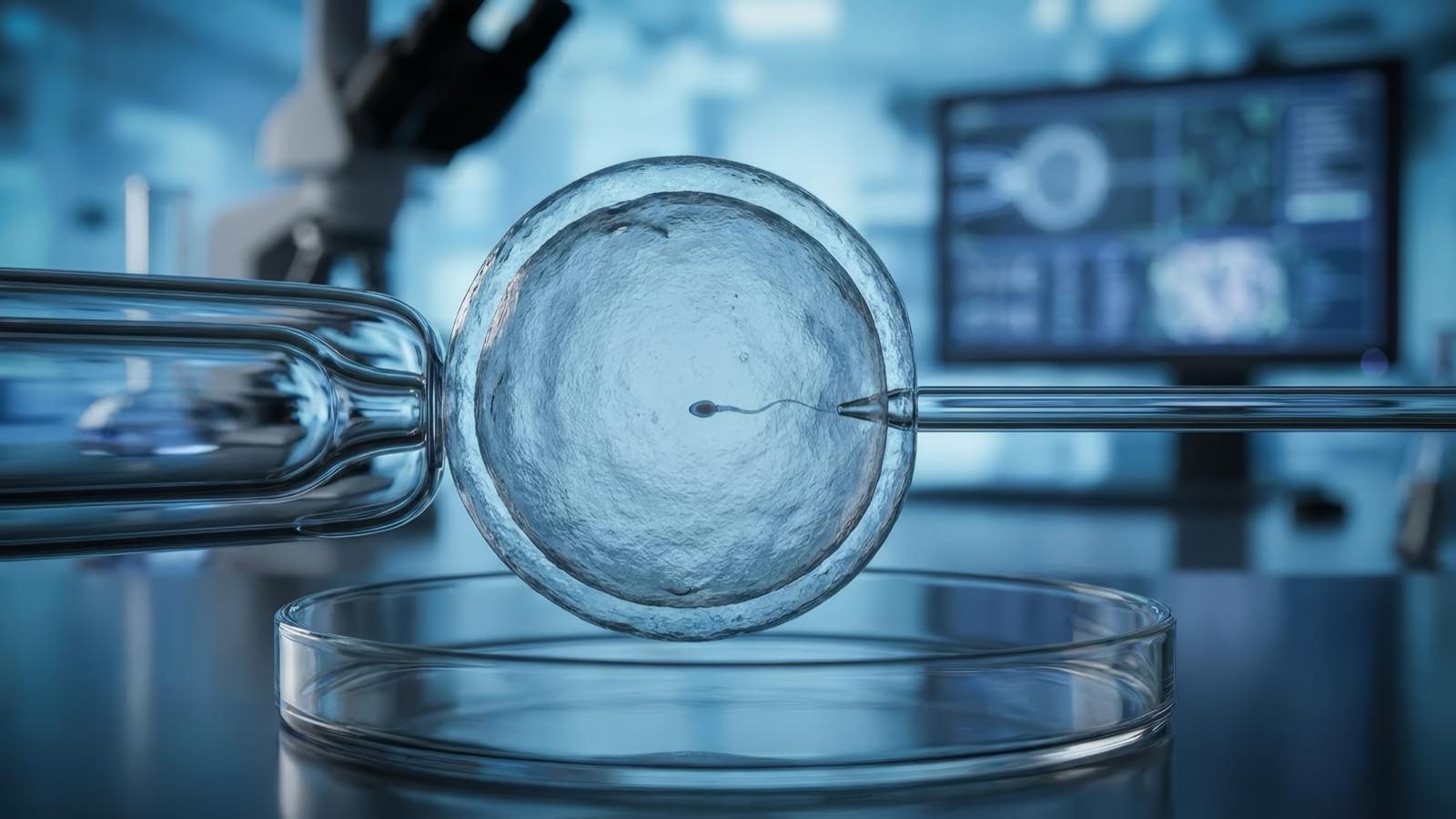
From tissue regeneration to artificial intelligence and genetic analysis, reproductive medicine is leaving one-size-fits-all treatment behind and making room for increasingly precise strategies.
Here are the trends to watch and what they mean for anyone trying to get pregnant.
Regenerate to recover: the new chapter in reproductive medicine
For a long time, talking about reproductive medicine mostly meant talking about hormones, ovarian stimulation, and in vitro fertilization (IVF). Science is changing that conversation. Today, when a treatment doesn’t work, the question goes much deeper: what is really happening in the body, and what can be done to change that picture?
This new perspective has driven the development of regenerative medicine, a field that seeks to harness the body’s natural tissue repair mechanisms and explore new ways to restore function.
In assisted reproduction, one of the main areas of research has been the endometrium. Conditions such as Asherman’s syndrome, intrauterine adhesions, or a thin or refractory endometrium can make implantation harder and become a challenge for fertility treatment. That is why researchers around the world are studying strategies that include stem cells, growth factors, platelet-rich plasma, biomaterials, and other bioengineering tools.
The idea is especially compelling: instead of simply working around a tissue that has problems, regenerative medicine looks at whether it is possible to help that tissue regain functional characteristics.
This is where it matters to separate innovation from overpromising. Many of these technologies are still being researched, and the available evidence varies by treatment, diagnosis, and the population studied. Recent reviews point out that important questions remain about protocols, patient selection, safety, and long-term clinical outcomes.
So regenerative medicine is best understood as a new tool within an increasingly specialized field of medicine, rather than as a universal fix. And that is where the real change begins.
A treatment for every story: reproductive medicine gets personal
No two fertility stories are exactly alike. A woman with low ovarian reserve doesn’t necessarily face the same challenge as a woman with endometriosis. Someone with several failed IVF cycles may need a completely different workup than someone who is just starting out. And a couple dealing with a significant male factor may need different strategies than a patient with uterine abnormalities.
For years, the challenge was finding the right treatment within a catalog of options. Now the goal is to move toward something more precise: building the treatment around each patient’s biological history.
Personalized reproductive medicine combines clinical, hormonal, anatomical, genetic, and metabolic information to better understand which factors may be at play in each case. That can range from assessing ovarian reserve and sperm quality to evaluating the uterus, medical history, and previous treatments, plus genetic or metabolic testing when indicated.
In other words, the question is changing. Along with what treatment should we do?, the question now is what does this case need, and why?
This shift can be especially relevant when there is a history of multiple unsuccessful treatments. Repeating the exact same path doesn’t necessarily address the reason the previous attempt didn’t work. That is why technologies such as regenerative medicine, reproductive genetics, and digital tools are starting to be built into broader strategies.
At Ingenes, this vision is part of TripleMed®, a model that brings together Reproductive Medicine, Regenerative and Genetic Medicine, and Metabolic Medicine to build personalized protocols based on each patient’s history and test results.
In this context, innovation goes beyond having more technology. It means knowing when to use it, for whom, and to what end.
AI comes to the lab: when data starts to change IVF
If there is one technology transforming practically every field of medicine, it is artificial intelligence. The assisted reproduction lab is no exception.
During IVF, embryologists watch how embryos develop and use different characteristics to assess which ones may have the best chance of continuing to develop. Traditionally, that assessment has relied heavily on morphological observation.
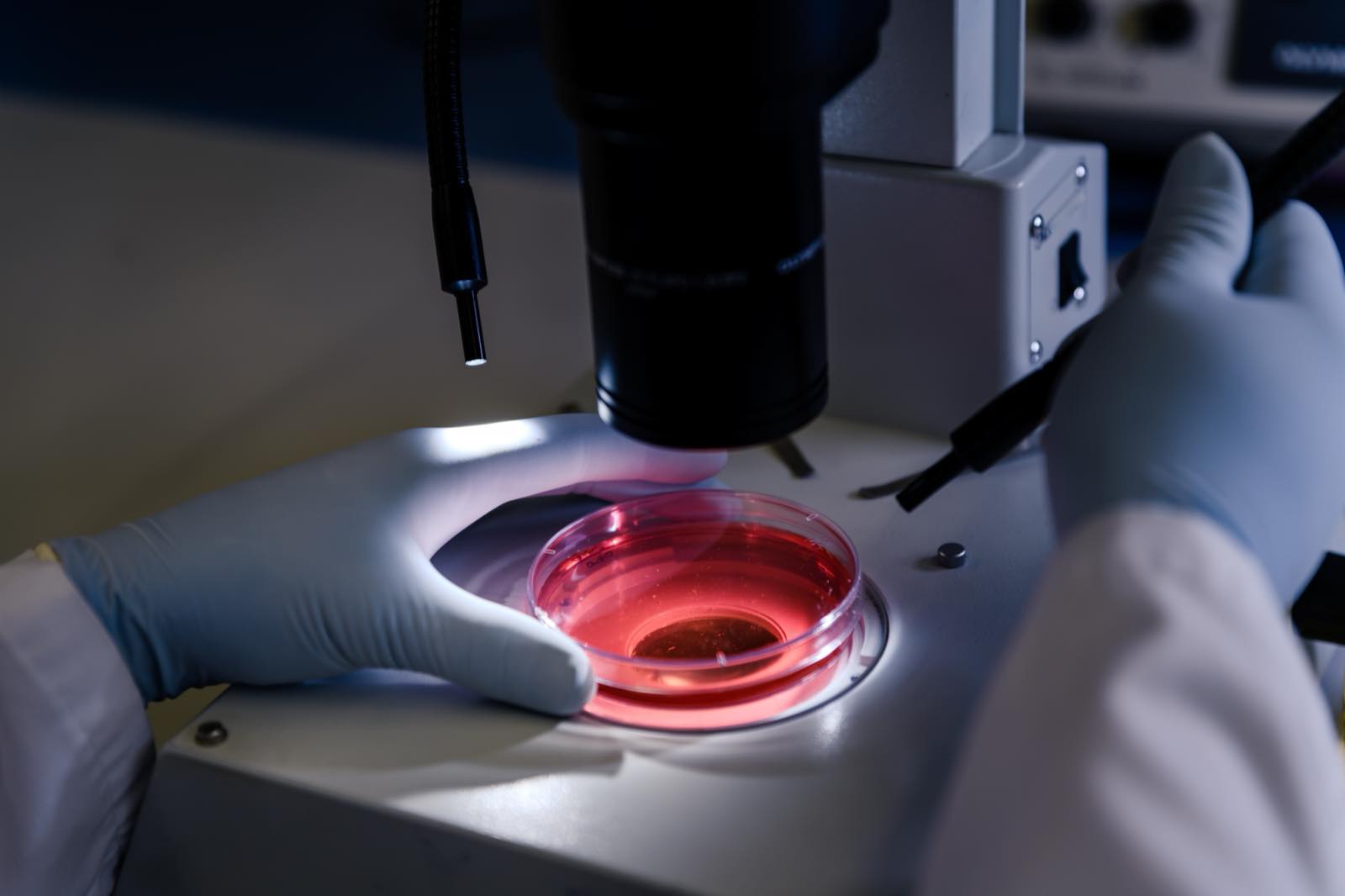
Embryo assessment in the lab remains in the hands of the embryology team.
Artificial intelligence opens up a new possibility: analyzing enormous amounts of information that would be hard for one person to take in all at once. Embryo images, developmental data, morphology, culture parameters, and certain clinical data can all become information used to train algorithms that identify patterns.
A range of studies have found promising results for AI applied to embryo selection and assessment. One recent systematic review, for example, found that AI models show potential for predicting certain treatment outcomes, while also noting the need to validate these systems in larger and more diverse populations.
There is an important point here: AI is not here to replace the embryologist. The American Society for Reproductive Medicine (ASRM) itself states that AI implementation in IVF labs is still at an early stage, and that benefits in quality, safety, and clinical outcomes must be demonstrated before its use becomes widespread.
So perhaps the most useful way to picture this technology is as a tool that helps the medical team turn large volumes of data into information they can use to make decisions, rather than as “a machine that picks the best embryo.”
The difference seems small, but it changes a lot. When technology can spot patterns the human eye doesn’t easily detect, the lab stops being only a place where what happens is observed.
DNA takes center stage: the new era of reproductive genetics
Another revolution is happening on an even smaller scale, so small that it takes place inside our cells: DNA. Reproductive genetics has advanced significantly thanks to technologies that can analyze the genetic material of embryos and detect certain abnormalities before transfer.
Preimplantation genetic testing can be used for different purposes. For example, PGT-M looks for certain diseases caused by changes in a single gene, while PGT-A looks for abnormalities in the number of chromosomes.
These tools can provide relevant information in selected cases, but that doesn’t mean every embryo should automatically undergo genetic testing. In fact, ASRM states that the value of PGT-A as a universal test for everyone doing IVF has not been demonstrated, and that the decision should take into account the clinical context and the limitations of the technology.
There are also important limits that should be explained before any test is done. For example, the result of a trophectoderm biopsy doesn’t necessarily represent every cell in the embryo, because of phenomena such as mosaicism. There can also be results with no diagnosis, false positives, or false negatives.
That is why reproductive genetics involves much more than “reading the DNA and choosing”: it means obtaining genetic information, interpreting it correctly, and understanding what it means within a specific clinical history.
This distinction will matter more and more. As genetic technologies become more sophisticated, so does the need for specialists who can translate those results into medical decisions patients can understand. Genetics, embryology, and assisted reproduction are starting to speak the same language.
Frequently asked questions
Is regenerative medicine already used in fertility treatment?
Yes, in selected cases and with evidence that is still developing. Many of these technologies are still being researched, and results vary by treatment, diagnosis, and the population studied. At Ingenes, regenerative medicine is part of the TripleMed® model, and whether it is indicated is decided based on each patient’s history and test results.
Does artificial intelligence decide which embryo gets transferred?
No. AI works as a support tool for the embryology team, analyzing large volumes of data to identify patterns. ASRM considers its implementation in IVF labs to be at an early stage and says its benefits must be demonstrated before its use becomes widespread.
Does everyone doing IVF need PGT-A?
Not necessarily. According to ASRM, the value of PGT-A as a universal test for everyone doing IVF has not been demonstrated. Whether it is indicated depends on your clinical situation, and its limitations should be explained to you along with it.
What is embryo mosaicism?
Mosaicism means that not all of an embryo’s cells have the same chromosomal makeup. As a result, a biopsy of a few trophectoderm cells doesn’t necessarily represent the whole embryo, and it is one of the limits that should be explained before genetic testing.
Protocols designed around each patient
Reproductive medicine is going through a paradigm shift. The answers aren’t the same for everyone, and that is precisely why the future of reproductive medicine is moving toward protocols designed around the patient instead of around a standard treatment.
At Ingenes, this evolution shows up in a model that brings assisted reproduction, genetics, and regenerative medicine together under TripleMed®, so that each story is studied from different angles before the path forward is defined.
Because perhaps the next big chapter in fertility lies in learning to better understand what each story needs, instead of searching for one treatment that works for everyone.
Sources
- American Society for Reproductive Medicine. Artificial intelligence in the in vitro fertilization laboratory: a committee opinion. asrm.org
- American Society for Reproductive Medicine. The use of preimplantation genetic testing for aneuploidy: a committee opinion (2024). asrm.org
- Human Reproduction Open. Embryo selection through artificial intelligence versus embryologists: a systematic review (2023). ncbi.nlm.nih.gov
- Frontiers in Cell and Developmental Biology. Regenerative therapies for refractory thin endometrium in in vitro fertilization (2025). ncbi.nlm.nih.gov