
Fertility rate in Mexico: why women are having fewer children

For decades, starting a family in Mexico seemed to follow a fairly set script: grow up, study, work, marry, have children. That script no longer matches the lives of many people.
Priorities today are different. Education takes more years, career paths have changed, financial independence arrives later, and many women and couples prefer to wait before trying for a baby.
One figure captures much of that shift: Mexico is having fewer children. Behind every percentage point there are personal decisions, social change, and a question that comes up more and more often: what if I want children, but this is not the moment?
From 1.9 to 1.2 children per woman in five years
INEGI’s 2025 Intercensal Survey put numbers to something that was already in the air. The total fertility rate fell from 1.9 children per woman in 2019 to 1.2 in 2024, a drop of almost 37 % in just five years.
That places Mexico well below the 2.1 children per woman considered the generational replacement rate, meaning the level needed for a population to stay stable without migration.
The decline is not even across the country:
- Mexico City records the lowest rate, at 0.8 children per woman
- Chiapas leads with 1.8, followed by Guerrero at 1.6
- Durango and Zacatecas reach 1.5
- All 32 states sit below two children per woman
There is another cut that says a lot: women with no schooling average 4.9 children, while those with upper secondary or higher education average 1.2. That gap speaks about context, not about desire.
Having fewer children does not mean not wanting them
Behind these numbers there is something more interesting than a statistic: the way people picture their family has changed too.
Having fewer children, having them later, or waiting for better personal and financial conditions is part of a broad social shift. And there is a distinction worth naming: one thing is when a person wants to start a family, another is when their biology can follow that plan.
Motherhood can be postponed for many reasons. Female fertility, on the other hand, changes with age and does not work like a calendar you can pause and restart once life finally looks ready.
Reproductive medicine does not decide for anyone when to start a family. Its role is to offer information and options so that decision is made with knowledge of your own biology.
What you can know about your fertility today
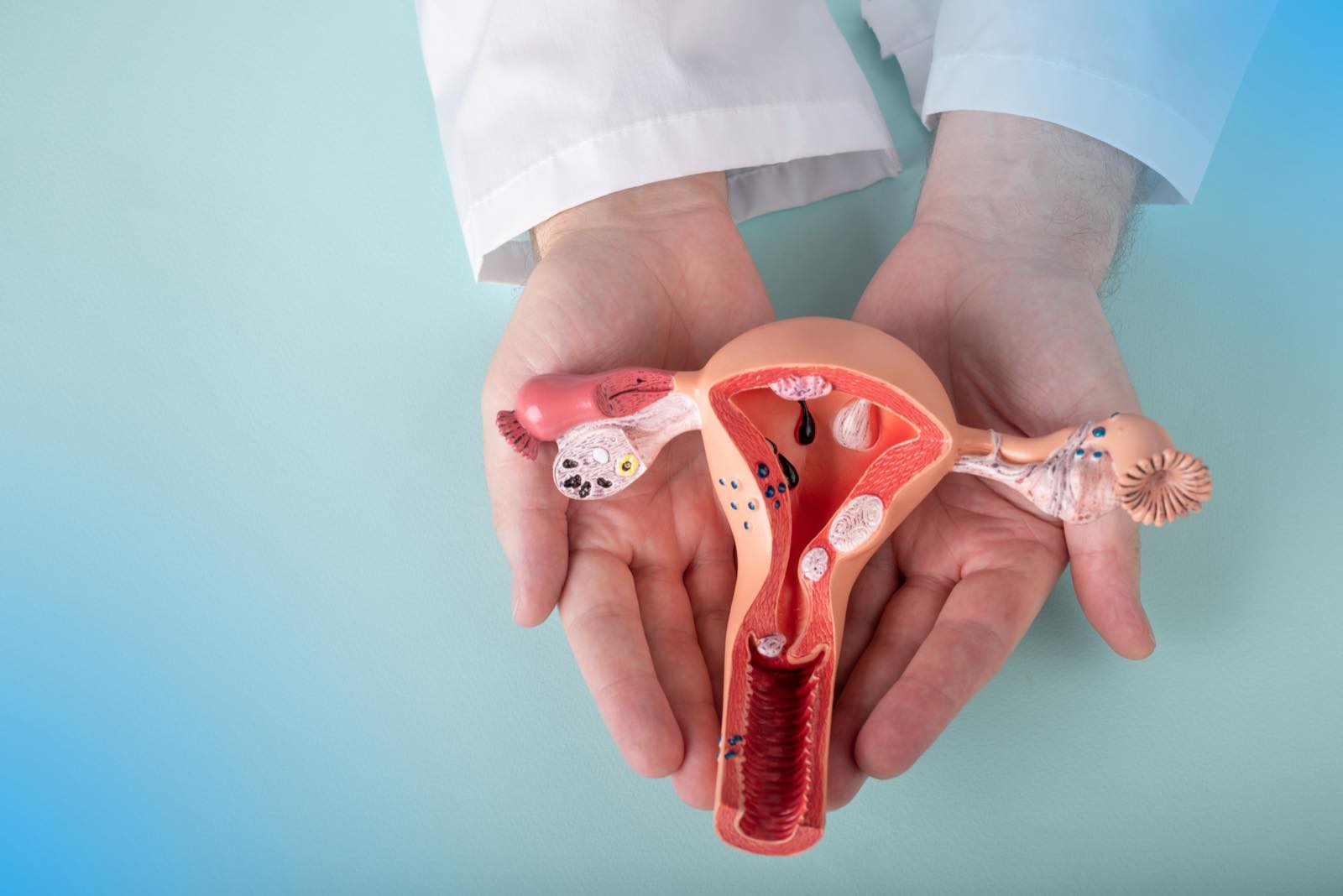
When the conversation happens early, it stops being only about treatments for a problem and becomes preventive. A fertility assessment can include markers such as:
- Anti-Müllerian hormone (AMH), related to ovarian reserve
- Follicle-stimulating hormone (FSH), which says something about how the ovary is working
- Antral follicle count (AFC), observed by ultrasound
A specialist reads them together, never in isolation, and that gives a picture of your current reproductive moment.
It is worth saying plainly: no test predicts the future of your fertility with certainty. Ovarian reserve speaks to the number of eggs available, while age remains one of the strongest factors behind their quality.
Preserving today to decide tomorrow
Egg freezing is one of the tools reproductive medicine developed to support this shift. The procedure involves stimulating the ovaries to obtain several eggs, retrieving the mature ones through a puncture, and vitrifying them for storage.
That said, preserving fertility does not amount to buying unlimited time. It works as a tool that widens your reproductive options in certain circumstances, and it helps to approach it with realistic expectations.
Freezing eggs does not guarantee a future birth either. The number of eggs retrieved, your age at vitrification, their maturity, how they survive thawing, and other factors all play a part. In general, eggs retrieved at younger ages are more likely to have favorable chromosomal characteristics.
So if you are considering preservation, talking to a specialist early helps you understand what it means in your case, not in the average.
Frequently asked questions
What is the total fertility rate?
It is the average number of children a woman would have across her reproductive life if current conditions held. In Mexico it went from 1.9 in 2019 to 1.2 in 2024, according to INEGI’s 2025 Intercensal Survey.
Why is 2.1 the reference number?
Because it is the generational replacement rate: the number of children per woman needed for a population to stay stable over time, setting migration aside.
At what age should I assess my fertility?
There is no single age. If you are postponing motherhood or have questions about your ovarian reserve, an early assessment gives you information to decide with time, rather than finding out when you are already in a hurry.
Does freezing eggs guarantee I will have a baby?
No. It widens your options, but the outcome depends on several factors: how many eggs were retrieved, your age at vitrification, their maturity, and how they survive thawing.
Is egg freezing worth it after 38?
It can be, although the odds change with age. What matters is an individual assessment: your ovarian reserve markers and your medical history say considerably more than the number of years.
Deciding with information, not in a rush
Mexico is changing. Families look different, so do life plans, and motherhood no longer happens at the same moment it did a few decades ago.
While decisions change, biology keeps its own timing. That is where an early conversation makes the difference.
At Ingenes we support each story with that logic: understand first, assess next, and explore the options that make sense for each person. You can start with a First Consultation, where factors such as ovarian reserve are reviewed and the alternatives that fit your case are laid out.
Perhaps the real change is not that Mexico is having fewer children, but that many people today can make reproductive decisions that are better informed and closer to their own story.
Sources
- INEGI. 2025 Intercensal Survey. inegi.org.mx
- El Universal. An older Mexico with fewer children: INEGI reports fertility falling to 1.2 per woman, September 2026. eluniversal.com.mx
- Milenio. Fertility in Mexico falls to 1.2 children per woman, September 2026. milenio.com
- El Informador. Birth rate in Mexico continues to fall, September 2026. informador.mx