

Embryologist Day: The Story of the First Baby Born Through IVF
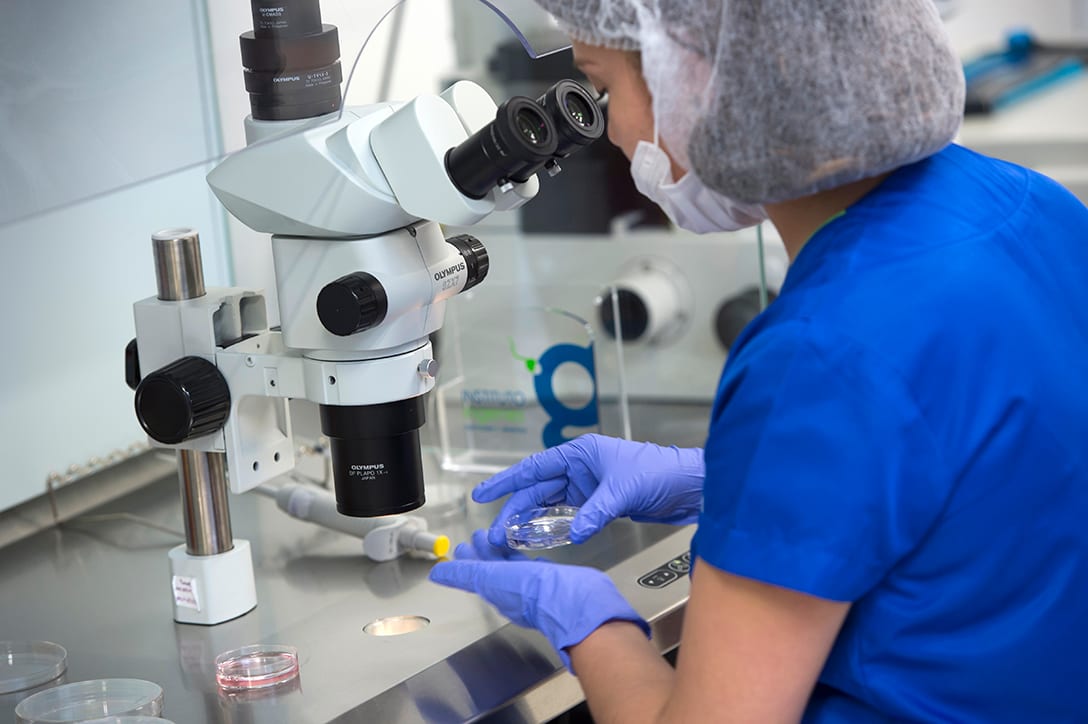
Every year, Embryologist Day gives us the opportunity to recognize one of the most important professionals in assisted reproduction while also remembering one of the events that forever transformed the history of reproductive medicine: the birth of the first baby conceived through In Vitro Fertilization (IVF).
Today, millions of people around the world have been able to build their families thanks to advances in assisted reproduction. However, behind every embryo, every treatment, and every success story is highly specialized work that often remains out of sight for patients.
Embryologists are the professionals who work in fertility laboratories observing, analyzing, and supporting some of the earliest stages of life’s development.
Their work requires scientific precision, experience, advanced technology, and a deep commitment to every patient who places their hopes in fertility treatment.
The Birth That Changed the History of Assisted Reproduction
On July 25, 1978, an event took place that marked a turning point in medicine.
That day, Louise Brown, the first person conceived through an IVF treatment, was born.
For years, many couples had faced infertility without having effective alternatives to achieve pregnancy. The possibility of fertilizing an egg outside the human body seemed like an enormous challenge for the science of that era.
Thanks to the pioneering work of specialists in reproductive medicine and embryology, it became possible to develop a technique that allowed an egg and sperm to unite in the laboratory before transferring the embryo to the uterus.
The birth of Louise Brown demonstrated that what once seemed impossible could become reality.
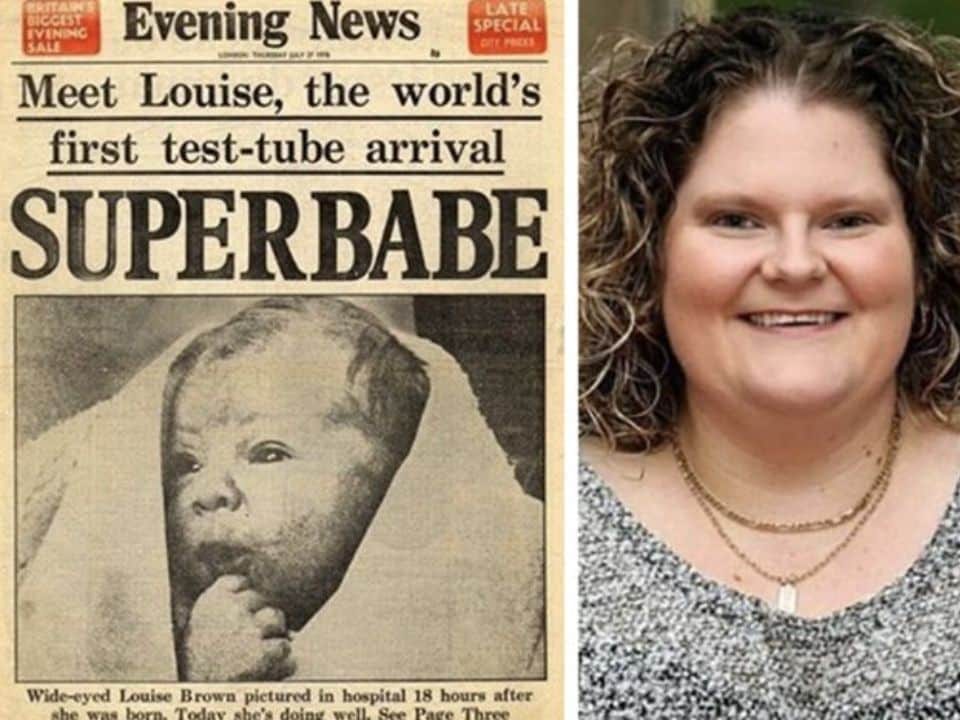
Louise Brown, the first baby born through In Vitro Fertilization, in 1978.
Since then, assisted reproduction has evolved in extraordinary ways.
Today, millions of babies have been born thanks to fertility treatments performed around the world.
What Does an Embryologist Do?
When people hear about fertility treatments, they often immediately think of fertility specialists, hormone testing, or clinical procedures.
However, much of what happens during IVF takes place inside the laboratory.
This is where the embryologist plays a fundamental role.
Their main responsibilities include:
- Evaluating eggs retrieved during treatment
- Preparing and analyzing sperm samples
- Performing fertilization procedures
- Monitoring embryo development
- Selecting embryos with the most favorable characteristics
- Preserving eggs, sperm, and embryos through vitrification
- Working with advanced embryo monitoring technologies
Each of these stages requires expertise and precision because small details can make a significant difference throughout the reproductive process.
Much More Than Observing Embryos
People often assume embryologists simply look at cells through a microscope.
The reality is far more complex.
Assisted reproduction laboratories are highly controlled environments where factors such as temperature, humidity, air quality, and culture conditions must be maintained under strict standards.
Embryologists continuously monitor these parameters to create the optimal environment for embryo development.
They also use advanced technologies that make it possible to evaluate embryo growth with levels of precision that would have seemed impossible just a few decades ago.
Thanks to these advances, it is now possible to obtain much more detailed information about embryo development and make more personalized decisions for each patient.
The Evolution of In Vitro Fertilization
Since the birth of the first IVF baby, reproductive medicine has advanced tremendously.
Today’s techniques offer greater chances of success, more precise diagnoses, and treatments tailored to the specific needs of each individual.
Some of the most important advances include:
ICSI (Intracytoplasmic Sperm Injection)
This technique allows a sperm cell to be injected directly into an egg when male fertility factors make fertilization more difficult.
Vitrification
Vitrification has revolutionized the preservation of eggs, embryos, and sperm through ultra rapid freezing processes.
Continuous Embryo Monitoring
This technology allows specialists to observe embryo development without disrupting culture conditions.
Embryo Genetic Testing
These studies help identify chromosomal abnormalities before embryo transfer.
Personalized Protocols
Treatment plans can be adapted to each patient’s unique characteristics and reproductive needs.
All of these advances are possible thanks to the collaborative work of reproductive medicine specialists and embryologists.
The Embryologist’s Role in Every Fertility Journey
Every patient who arrives at a fertility clinic has a unique story.
Some people have been trying to conceive for months.
Others have faced years of uncertainty, unsuccessful treatments, or complex diagnoses.
For many of them, the laboratory becomes a place where new possibilities begin.
Although patients do not always directly witness the work taking place behind laboratory doors, embryologists are involved in some of the most important moments of treatment.
They are the professionals who observe fertilization.
They monitor the earliest cell divisions.
They evaluate embryo development.
And they help ensure that every step takes place under the best possible conditions.
For this reason, the work of the embryologist has a direct impact on every fertility story.
The Science Behind the First Days of Life
One of the most fascinating aspects of embryology is that it allows specialists to observe processes that occur during the earliest stages of human development.
After fertilization, the embryo begins a series of highly coordinated cell divisions.
During the first few days, extraordinary changes occur:
- Formation of the zygote
- First cellular divisions
- Early embryo development
- Blastocyst formation
Each of these stages provides valuable information for specialists.
Careful observation of embryo development helps identify which embryos demonstrate the most favorable characteristics for continuing treatment.
This level of knowledge has significantly improved the strategies used in assisted reproduction.
The Technology Driving New Possibilities
Modern assisted reproduction combines medical expertise with technological innovation.
Today, fertility laboratories are equipped with tools that allow work to be performed with extraordinary precision.
These include:
- High resolution microscopes
- Advanced incubators
- Continuous monitoring systems
- Specialized vitrification equipment
- Technology for genetic testing
These tools help optimize every stage of the reproductive process.
However, technology alone is not enough.
The expertise of embryologists remains essential for interpreting the information obtained and making appropriate decisions throughout treatment.
Embryologist Day: Recognizing Those Who Work Behind Every Possibility
Most people are familiar with the physicians who participate in fertility treatment.
Far fewer know about the professionals working behind the scenes in fertility laboratories.
Embryologist Day represents an opportunity to recognize the individuals who dedicate their careers to studying, protecting, and supporting the earliest stages of embryo development.
Their work combines scientific knowledge, continuous education, and a deep commitment to every patient.
Thanks to them, more possibilities exist today for individuals and couples facing reproductive challenges.
More Than Four Decades of Transforming Lives
Since the birth of the first IVF baby in 1978, assisted reproduction has helped millions of families around the world.
What began as a groundbreaking scientific achievement has become a tool that continues to transform lives.
Today, fertility treatments can address many factors that previously limited the possibility of achieving pregnancy.
Reproductive medicine continues to evolve, developing new technologies and expanding opportunities for those who dream of building a family.
At Ingenes, Science and Experience Work Together to Bring You Closer to Your Dream
At Ingenes, we understand that behind every treatment there is a story, a dream, and a life project.
That is why we have highly specialized laboratories, advanced technology, and multidisciplinary teams where physicians and embryologists work together to provide comprehensive and personalized care.
Every egg, every sperm cell, and every embryo receives careful evaluation based on quality protocols and international standards.
Because modern embryology is not simply about observing cells.
It is about creating opportunities.
It is about transforming uncertainty into possibilities.
And it is about helping more people discover that building a family can be possible.
On this Embryologist Day, we recognize the work of those who quietly participate in some of life’s most important moments and celebrate more than four decades of scientific advances that continue bringing thousands of people closer to the dream of having a baby.
Want to know how a fertility treatment could help you? Schedule your First Consultation and take the first step.