

Low Complexity Treatments
Low Complexity treatments are the least invasive: fertilization happens inside the body. They include Artificial Insemination, Timed Intercourse and preservation techniques.
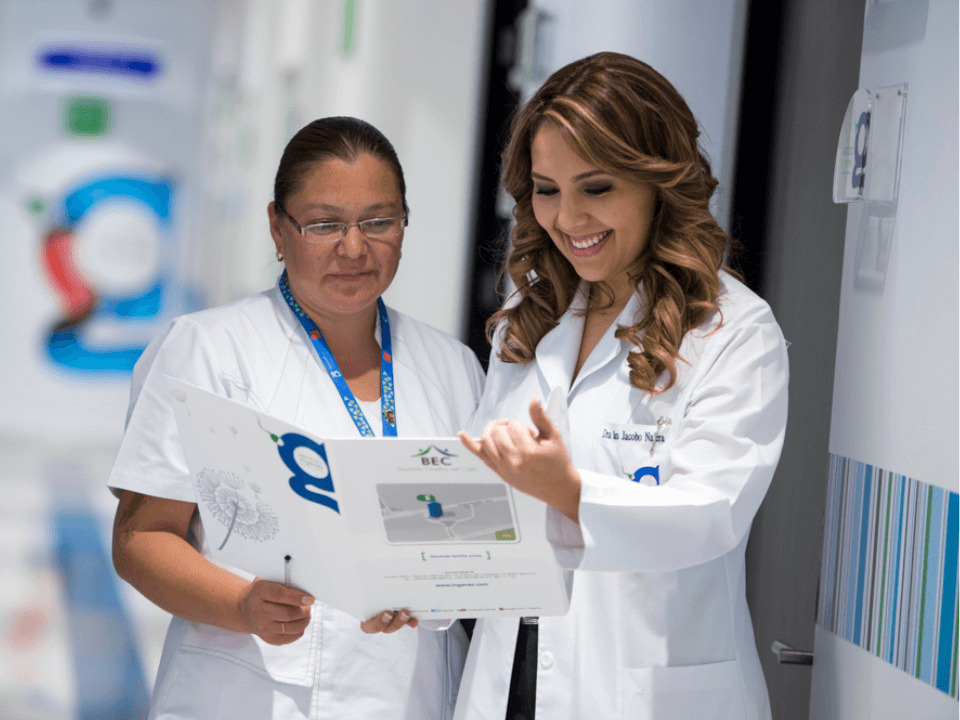
Low Complexity treatments are the least invasive in assisted reproduction. Fertilization between egg and sperm happens inside the woman's body, not in the lab. The medical team only times the moment, prepares the sperm sample, or syncs the cycle.
They are a reasonable option when diagnoses are mild, the woman is under 35, male factor is minimal, and there is no history of previous failures. For more complex profiles, the indication is usually to go straight to High Complexity.
At Ingenes we apply them only when the diagnosis shows they have real chances. We don't prescribe them because they are cheaper: we prescribe them when they are the best path.
- 0st Step on the diagnostic path
- Minimal Invasiveness and intervention
- <0 Ideal age for the woman
What defines a Low Complexity treatment
-
Minimal clinical intervention
The lab does not perform fertilization. It only processes the sperm sample or monitors the cycle. The woman's body does the main work.
-
The body is the lab
Fertilization happens inside the female reproductive system, just as in a natural conception. Clinical support increases the chances during fertile days.
-
Clear diagnostic path
If pregnancy is not achieved after 3 to 6 attempts, the team knows it is time to escalate to High Complexity. The path never stops moving forward.
Profiles that can start with Low Complexity
The indication does not depend on urgency or budget. It depends on the clinical diagnosis. Some typical profiles where Low Complexity has real chances: women under 35 with regular ovulatory cycles, mild or no male factor, patent tubes, no significant endometriosis, and no previous losses.
For women over 38 with low ovarian reserve, moderate or severe male factor, endometriosis, history of failed inseminations or miscarriage, the indication is to skip directly to High Complexity to avoid losing biological time.
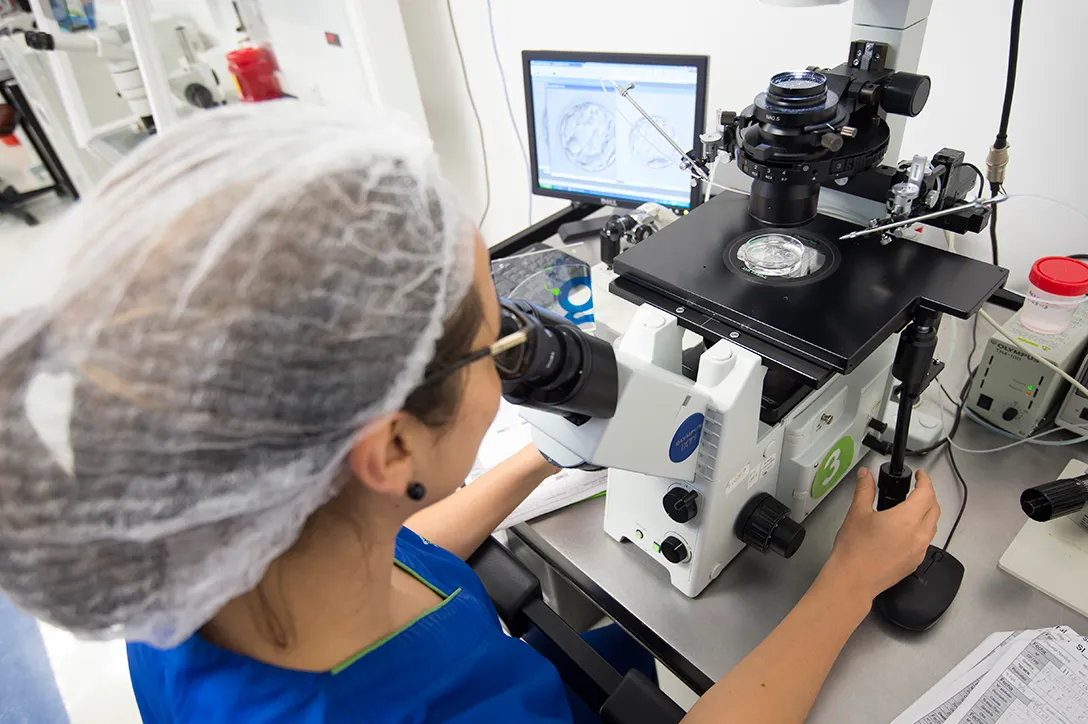
Which treatments are part of Low Complexity
-
Artificial Insemination
Sperm processed in the lab is placed directly in the uterus on fertile days. The most common low complexity technique; 3 to 6 cycles are evaluated before escalating.
See Insemination -
Timed Intercourse
Ultrasound and hormonal monitoring of the cycle to identify fertile days precisely. No invasive medication or procedures. The first step when the diagnosis allows it.
See Timed Intercourse -
Egg freezing
Vitrification of own eggs to postpone motherhood without losing biological quality. For women who are not yet pursuing pregnancy but want to protect their future fertility.
See Egg Freezing -
International Sperm Bank
Access to international donors with verified genetics for female couples, single women, or when male factor prevents using own sperm.
See International Bank
Your path is unique. So is your plan.
We design a protocol tailored to you after understanding your story and your previous tests. No generic diagnoses or protocols.
The moment to move to High Complexity
Low Complexity has a clear limit. After 3 to 6 insemination cycles without success, the chances of pregnancy through this path drop significantly. Insisting without revising the plan usually means losing biological time, especially if the woman is over 35.
In those cases the indication is to escalate to IVF (with or without ICSI/PICSI). It is neither a step back nor bad news: it is the honest reading of the diagnosis. We tell you that openly in the follow-up consultation.

Frequently asked questions about Low Complexity
What is the difference between Low and High Complexity?
In Low Complexity, fertilization happens inside the woman's body (timed intercourse, insemination). In High Complexity, it happens in the lab (IVF, ICSI, PICSI). The diagnosis defines the choice, not the preference or the cost.
How many insemination cycles should we try?
The standard is 3 to 6 cycles. If pregnancy is not achieved in that range, the chances of success in further attempts drop significantly. That is the moment to evaluate moving to IVF.
Who is not a candidate for Low Complexity?
Women with blocked or absent tubes, significantly low ovarian reserve, moderate or severe endometriosis, age over 38, moderate or severe male factor, or history of previous failures. In those cases the indication is to go directly to High Complexity.
How long does a Low Complexity cycle last?
An insemination cycle takes between 2 and 3 weeks: natural cycle monitoring or light stimulation, fertile day identification, insemination, and 2 weeks until the blood pregnancy test.
Should I start with Low Complexity just to try?
Only if the diagnosis supports it. Starting with Low Complexity when clinical data indicates minimal chances means losing time. That is why we always begin with the First Consultation before choosing the level.
Want to know if Low Complexity fits your case?
We define it with a clear diagnosis, not by default. We start at the First Consultation to see which level gives more real chances in your case.
Contact us