

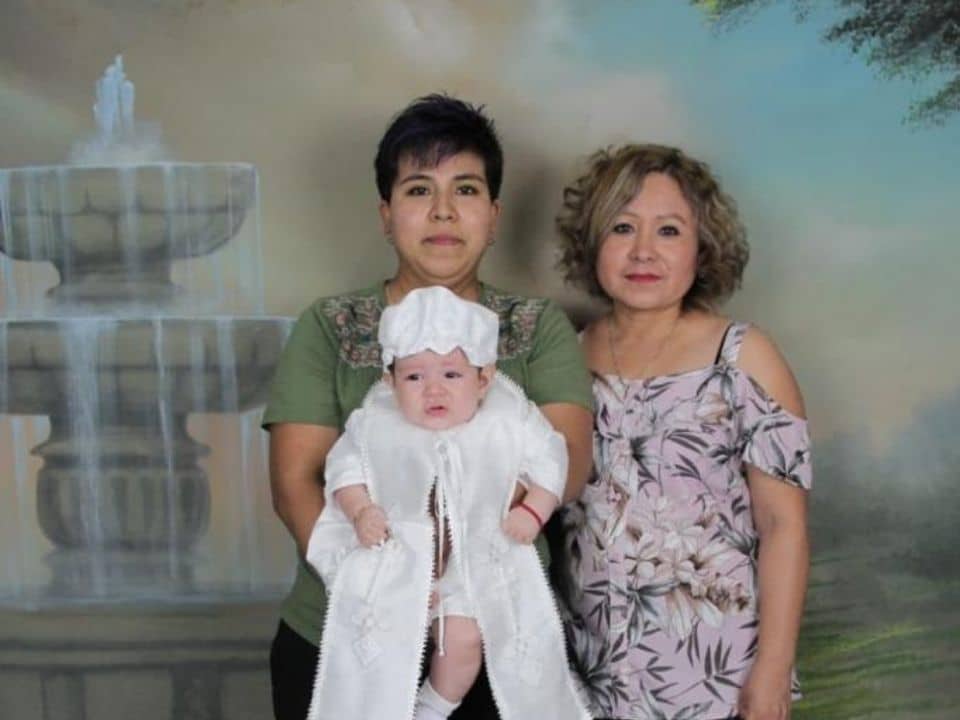
The ROPA method is an assisted reproduction treatment that allows female couples to share motherhood: have a child who belongs to both. Guadalupe and her wife fulfill their dream with little Matías; here they share their experience.
What is the ROPA method and what is it for?
Among assisted reproduction options is the ROPA method, also known as shared motherhood. This treatment uses in vitro fertilization (IVF) to create an embryo using one woman’s egg and transfer it to the other woman’s uterus. Thanks to scientific research, many female couples can now make their dream of becoming mothers come true.
How does it work step by step?
1. Ovarian stimulation in the genetic mother to retrieve 5–15 oocytes.
2. In vitro fertilization using donor sperm.
3. Culture to blastocyst stage (day 5) and transfer of 1–2 embryos (~5 mL of culture medium) to the gestational mother’s uterus.
4. Both participate actively: one provides the genetic material and the other carries the pregnancy.
What can you expect in your first IVF cycle?
Guadalupe and her wife joined a multicycle program with guarantee. They received daily gonadotropin injections (150 IU of FSH) and supported each other every step of the way. After egg retrieval (average 8–12 oocytes), they selected donor sperm and transferred a blastocyst. The first cycle was β-hCG positive, but no embryo appeared on ultrasound, an emotionally tough moment.
How is the treatment adjusted after a failed first attempt?
The team reviewed ovarian response, embryo quality, and endometrial thickness (optimal 7–12 mm). They personalized doses and protocols (antagonist vs. long agonist) and offered psychological support. In the second cycle, with a positive attitude, they achieved an embryonic heartbeat at week 6 and saw a healthy gestational sac on ultrasound.
What does shared motherhood mean for you and your partner?
Shared motherhood involves an active role for both: one biological mother and one gestational mother. Legally and emotionally, both are recognized as parents from birth. As Guadalupe says: “We were together every step of the way, from choosing the ROPA method to Matías’s birth.”
Discover more testimonials: “With the ROPA method, we are both mothers” or “We chose ROPA to share our motherhood.”
How to prepare medically before starting?
Both undergo: ovarian reserve testing (AMH, antral follicle count), hysterosonography or hysteroscopy to evaluate the uterine cavity, and blood tests. If polycystic ovary syndrome (PCOS) is present, metformin (500 mg) may be prescribed. Maintaining a BMI between 18 and 25, a balanced diet, and avoiding tobacco helps improve success rates.
When to consult a fertility specialist?
If you have been trying to conceive for 12 months (6 months if you are over 35) without results, or if you know of any reproductive issues, see a reproductive endocrinologist. Avoid self-medication and get a personalized plan to increase your chances.
Frequently Asked Questions
1. What are the success rates of the ROPA method?
They depend on age, ovarian reserve, and embryo quality. For women under 35, the live birth rate per cycle is around 40–50%. It decreases with age. A multicycle guarantee program offers partial refunds if there is no baby.
2. Can both share the hormonal treatment?
Yes. Protocols can be synchronized so they go through the emotional journey together. One stimulates and retrieves eggs; the other prepares her endometrium with estrogen and progesterone. Mutual support strengthens the couple.
3. Is donor sperm always required?
Yes, since both partners are women. Sperm banks screen donors for genetic and infectious criteria, ensuring over 10 million motile sperm per mL. Some couples choose known donors; others prefer anonymous ones.
4. How long does the entire ROPA process take?
From initial consultation to transfer, 4–6 weeks. Stimulation lasts 10–14 days, retrieval and fertilization occur days 1–5, then embryo transfer. If planning multiple cycles, the timeline extends, though many clinics coordinate dates to reduce waits.
Sources Consulted
- American Society for Reproductive Medicine. (2020). Practice Committee document: Electronic address: ASRM. Fertility and Sterility, 113(5), 1102–1115. https://doi.org/10.1016/j.fertnstert.2020.02.028
- MedlinePlus. (2023). In Vitro Fertilization. U.S. National Library of Medicine. https://medlineplus.gov/ency/article/007283.htm
- European Society of Human Reproduction and Embryology. (2022). ESHRE Guideline: Assisted Reproductive Technology. Human Reproduction Open, 2022(2), hoac019. https://doi.org/10.1093/hropen/hoac019
- National Institute for Health and Care Excellence. (2013). Fertility: assessment and treatment for people with fertility problems (CG156). https://www.nice.org.uk/guidance/cg156
We know this journey can be intense. You are not alone: trusting an assisted reproduction specialist will give you the medical and emotional support you need.