

«I have a retroverted uterus, and I had my baby at 39»

Clara has a retroverted uterus, a common condition in many women that sometimes makes conception more difficult. Learn how she became Pedro’s mother at 39 and what you can take away from her experience.
What is a retroverted uterus and how does it affect fertility?
A retroverted uterus, also called a tilted uterus, is when the organ tilts toward the spine instead of forward. It affects up to 20% of women (MedlinePlus, 2021). Most have no symptoms, but pelvic adhesions from endometriosis, infections, or surgeries can accentuate it.
- Endometriosis
- Uterine or tubal infections
- Previous pelvic surgeries
A retroverted uterus alone does not prevent pregnancy, but it can complicate natural conception or require assisted techniques.
Is it possible to conceive naturally at 39 with a retroverted uterus?
Fertility begins to decline after 35 due to ovarian reserve and egg quality (ACOG, 2019). At 39, the odds decrease, but they are not zero. Maintaining a healthy BMI, avoiding tobacco, moderating caffeine, and leading a balanced lifestyle can make a difference. Timely medical check-ups and fertility assessments are key.
“Conquer fear, the best is waiting for you” was Clara’s motto: she accepted her age, sought expert advice, and was ready for assisted reproduction if needed. Avoid self-medication and trust a specialist.
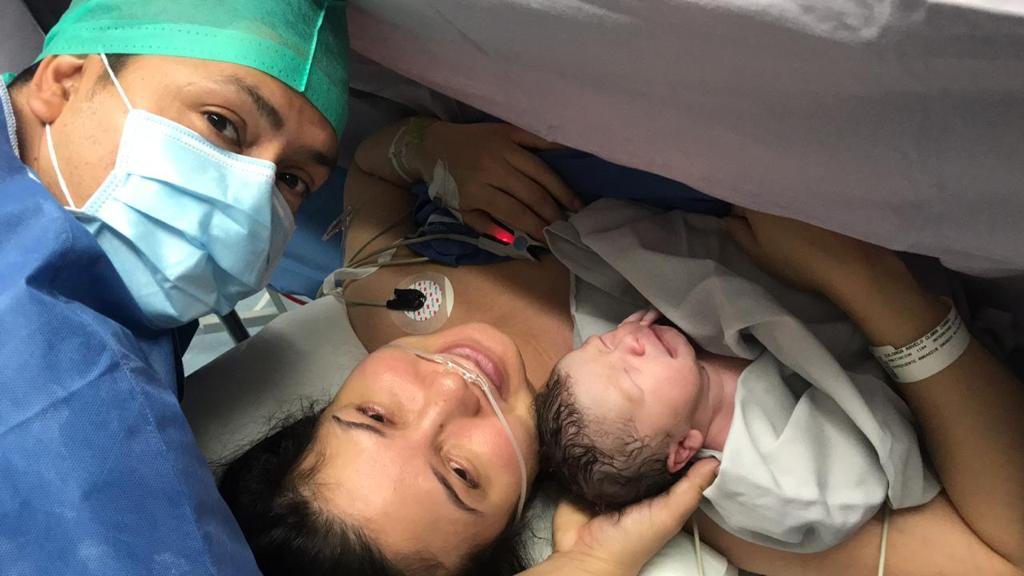
Clara, her husband and newborn Pedro – Ingenes Family
What was Clara’s IVF process step by step?
Clara and her husband opted for a multi-cycle IVF program with ovarian stimulation. The process included:
- Ovarian stimulation with FSH (225 IU/day) to obtain multiple follicles.
- Egg retrieval under sedation.
- Fertilization and embryo culture to blastocyst stage (D5–D6).
- Embryo transfer and luteal phase support with progesterone (600 mg/day vaginally).
Clara recalls: “I had cysts, they removed one ovary and I still enjoy my baby today” I had ovarian cysts…. Her determination and the team made this miracle possible.
What support programs exist for those over 35 with fertility issues?
At Ingenes, the Initial Program is designed for women over 35 with previous challenges. It offers:
- Comprehensive diagnostic panels (AMH, FSH, antral follicle count).
- Personalized treatment plans with biologists, andrologists, reproductive gynecologists, and psychotherapists.
- Emotional support groups and nutritional counseling.
Clara’s case shows there is hope: I had uterine fibroids and became a mother with IVF. Before starting any plan, consult a reproductive specialist.
Frequently Asked Questions
1. Can a retroverted uterus cause pain or symptoms?
Most have no symptoms. Some women experience pelvic discomfort during intercourse, strong cramps, or back pain. A transvaginal ultrasound confirms the position and rules out causes like endometriosis or adhesions.
Management may include NSAIDs, pelvic floor physiotherapy, or, in rare cases, uteropexy. Always consult your gynecologist for a tailored plan.
2. How does age influence IVF success?
IVF success is closely related to age. Women under 35 have a 40%–50% chance per cycle; between 38 and 40 it drops to 20%–25%; after 40 it’s <10%. Tests like AMH and follicle count help estimate your prognosis.
PGT-A can improve rates by selecting euploid embryos. Emotional support and realistic expectations are essential.
3. What lifestyle changes help at 39?
Maintain a BMI of 18.5–24.9 kg/m², a diet rich in folates and antioxidants, coffee <200 mg/day, no alcohol or tobacco. Manage stress with moderate exercise (30 min daily), yoga, or meditation. These habits support hormonal balance and uterine receptivity.
Supplements like vitamin D (1,000–2,000 IU/day) or coenzyme Q10 (200 mg/day) may help, always under medical supervision.
4. What emotional support is available during treatment?
Fertility treatments can cause anxiety and sadness. Psychotherapy, support groups, and mind-body techniques (yoga, meditation) help cope. At Ingenes, certified psychotherapists provide couple communication and resilience development.
Having a support network, partner, family, friends, reduces stress and gives a positive boost that can even improve outcomes.
References
- American College of Obstetricians and Gynecologists. (2019). Female age-related fertility decline. DOI:10.1097/AOG.0000000000003388
- MedlinePlus. (2021). Retroversion of the uterus. Retrieved from https://medlineplus.gov/ency/article/001506.htm
- Practice Committee of the American Society for Reproductive Medicine. (2017). Role of lifestyle factors in reproductive performance. Fertility and Sterility, 107(4), 912–919. DOI:10.1016/j.fertnstert.2016.12.006
- European Society of Human Reproduction and Embryology. (2020). Guidelines on andrology and fertility. Human Reproduction, 35(2), 304–318. DOI:10.1093/humrep/dez279
We are with you every step of the way. Don’t hesitate to seek professional help in assisted reproduction: a specialist will guide you toward your dream of becoming a mother or father.