Don't miss our updates

Discover the key differences between menstruation and implantation bleeding. Learn to recognize the first signs of pregnancy and better understand your menstrual cycle with clear, approachable information. At Ingenes, we’re by your side every step of the way toward parenthood, offering personalized guidance and care. Understanding menstruation and implantation bleeding is essential whether you’re trying to conceive or simply getting to know your body. Although both involve bleeding, they are distinct processes with their own signs. What is menstruation? Menstruation is the shedding of the uterine lining when there’s no fertilized egg. A regular cycle (every 21–35 days) usually reflects hormonal balance and good reproductive health. Duration: 3–7 days. Flow: Light to heavy, sometimes with clots. Color: Bright red to dark brown. Symptoms: Cramps, bloating, mood swings, and fatigue. What is implantation bleeding? When the fertilized egg attaches to the uterus, very light bleeding may occur, called implantation bleeding. It’s often one of the first signs of pregnancy. Timing: 10–14 days after conception, around the expected period date. Duration: 1–2 days. Flow: Very light. Color: Pale pink or brown. Key differences 1. Calendar If you track your cycle, spotting outside your usual window may indicate implantation. 2. Intensity and Symptoms Menstruation is heavier and may come with strong cramps. Implantation is light and nearly painless. 3. Appearance of the Flow Bright red flow = menstruation. Pink or brown spotting = implantation. Knowing these signs helps you understand your body and take informed next steps. For more details, visit Implantation Bleeding: What You Need to Know. When to seek medical help? If bleeding is very heavy, accompanied by severe pain, or you notice unusual spotting, see a reproductive medicine specialist. At Ingenes, we provide comprehensive evaluations to rule out issues like ectopic pregnancy, hormonal imbalances, or uterine abnormalities. Early assessment improves your chances of a healthy pregnancy. Frequently Asked Questions 1. Can You Have Implantation Bleeding Without Pregnancy? No. That bleeding happens when the embryo implants. Spotting outside your cycle usually stems from hormones or irritation. If in doubt, take a test after a missed period and consult if spotting continues. 2. Is Mild Cramping Normal? Light cramps can occur with implantation, but if pain is severe, seek medical attention. 3. Do Contraceptives Affect Bleeding? After stopping them, your cycle may be irregular and spotting might be mistaken for implantation. Track your cycle and talk to your doctor if spotting lasts more than two months or is painful. 4. Is Bleeding a Reliable Sign of Pregnancy? Not on its own. Many women don’t experience it. Pregnancy tests and hCG analysis are more accurate and help rule out issues like ectopic pregnancy. Sources MedlinePlus. (2023). Menstruation. https://medlineplus.gov/menstruation.html ACOG. (2022). Early Pregnancy Bleeding. https://www.acog.org/womens-health/faqs/early-pregnancy-bleeding Britannica. (2021). Implantation. https://doi.org/10.1036/1097-8542.747900 NIH. (2020). Implantation Bleeding. https://www.ncbi.nlm.nih.gov/books/NBK538507/ We’re with you every step of the way. If you have questions or want personalized guidance, consult an assisted reproduction specialist. Your journey to parenthood deserves expert care and close support.

Starting the journey to parenthood is exciting, but it can also raise questions about how to prepare. At Ingenes we guide you with a clear, approachable guide covering all aspects—physical, emotional, and lifestyle—to plan your pregnancy with confidence. First medical steps before conceiving Before trying to conceive, the most important step is to consult a fertility specialist. Together you’ll review your medical history and health status. Conditions like diabetes, hypertension, or sexually transmitted infections can affect pregnancy. A comprehensive checkup (blood tests, hormone profile, and imaging studies) will help you start off on the right foot. Nutrition and supplements A balanced diet and the right supplements are key: Folic acid: at least 400 µg daily, starting 3 months before conception. Iron: 18 mg per day. Calcium: 1,000 mg per day. Vitamin D: 600 IU per day. Choose whole grains, lean proteins, fruits, vegetables, and healthy fats. Avoid extreme diets. How to monitor fertility and ovulation Track your menstrual cycle by recording daily basal body temperature and changes in cervical mucus. Use a fertility app or calendar and consider ovulation kits (LH tests) to pinpoint your fertile window more accurately. Lifestyle and fertility Quit smoking and limit alcohol. Maintain a BMI between 18.5 and 24.9 kg/m². Do moderate exercise: 150 minutes of aerobic activity per week. Manage stress with yoga, meditation, or therapy. Review medications and medical conditions Some drugs—antidepressants, antihypertensives, anticonvulsants—can affect fertility or fetal development. Do not stop or change doses without consulting a specialist in Assisted Reproduction. Advanced reproductive options If after 6–12 months of trying (depending on age) you haven’t conceived, consider assisted reproduction. At Ingenes we offer everything from ovulation induction and IUI to IVF: A Complete Guide, always tailored to your needs. We assess sperm quality, ovarian reserve, and uterine health to recommend the best path. For more information, see our Comprehensive Guide to Reproductive Medicine. Emotional well-being with Ingenes We know trying to conceive can be an emotional roller coaster. That’s why we offer counseling, support groups, and stress-management workshops so you and your partner feel supported, informed, and empowered. Frequently Asked Questions (FAQ) How long should I take folic acid? Start at least 3 months before conception with 400 µg daily. Consult your specialist if you need higher doses (up to 4 mg/day) based on your history. Does stress affect fertility? Yes. Chronic stress alters hormones like cortisol and prolactin and can impair ovulation and sperm production. Relaxation techniques and emotional support improve your chances. When should I see a fertility specialist? Under 35: after 12 months of trying without protection. Over 35: after 6 months. If you have conditions like PCOS or endometriosis, seek help sooner. Do men get tested too? Male fertility accounts for 40–50% of cases. A semen analysis evaluates count, motility, and morphology. Depending on results, hormonal or genetic tests may be required. Sources American College of Obstetricians and Gynecologists. (2021). Practice Bulletin No. 200: Early Pregnancy Loss. Obstetrics & Gynecology, 136(4), e139–e153. https://doi.org/10.1097/AOG.0000000000004554 Centers for Disease Control and Prevention. (2022). Preconception Health and Healthcare. https://www.cdc.gov/preconception/index.html MedlinePlus. (2023). Folic Acid. https://medlineplus.gov/folicacid.html Practice Committee of the American Society for Reproductive Medicine. (2020). Diagnostic evaluation of the infertile female. Fertility and Sterility, 113(3), 545–553. https://doi.org/10.1016/j.fertnstert.2019.11.014 We’re with you every step of the way. If you have questions or want a personalized plan, consult an assisted reproduction specialist for the best care.


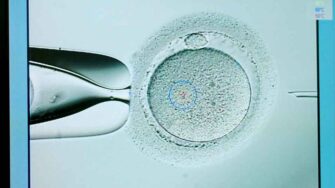
In Vitro Fertilization, known as IVF, represents a light of hope for those couples and women who face challenges in starting a family. At Ingenes Fertility Institute in Mexico, we are committed to offering comprehensive support in this vital process, providing advanced treatments, guidance, and emotional support during every stage of the journey.IVF is more than a medical procedure; It is a door to new possibilities of parenthood. This technique involves the union of eggs and sperm in a controlled environment outside the uterus, usually in a specialized laboratory. This method has revolutionized the field of assisted reproduction, providing effective solutions for a variety of fertility challenges. The IVF Process in detail Innovations and Advances in IVF At Ingenes, we use the latest innovations in the field of assisted reproduction to increase In Vitro Fertilization or IVF success rates. From advanced imaging techniques to state-of-the-art embryo culture methods, every aspect of the process is carried out with the highest precision and care. Benefits and Advantages of IVF The Role of Technology and Experience at Ingenes At Ingenes Fertility Institute in Mexico, the combination of cutting-edge technology and the vast experience of our specialists ensures that every step of the In Vitro Fertilization or IVF process is handled with the utmost precision and care. From detailed monitoring of embryonic development to implementing the most advanced techniques for embryo transfer, we strive to offer our patients the best chance of success. Emotional Support and Advice We know that the In Vitro Fertilization process can be emotionally challenging. For this reason, at Ingenes we offer comprehensive emotional support to accompany our patients and their partners throughout this journey. Our counselors and therapists can provide support and guidance, ensuring that each patient feels understood and supported. In Vitro Fertilization or IVF is not just a treatment, but a path of hope and possibilities. At Ingenes Fertility Institute in Mexico, we are dedicated to making this path as clear and supported as possible, helping our patients get closer to the dream of starting a family.If you are considering In Vitro Fertilization or IVF or facing fertility challenges, come to Ingenes. Let us guide you on this exciting journey towards building your family. With our experience and support, your dream of having a baby is closer than you imagine.

Understanding the fertilization process is essential when you’re trying to conceive. Although fertilization is an amazing phenomenon, it happens microscopically and almost always remains unnoticed. We explain it clearly and in a friendly way. What is an egg and how does fertilization occur? The egg, or female gamete, is the cell produced by the ovaries. Each month, one of your ovaries releases an egg during ovulation and it travels through the fallopian tube toward the uterus. Fertilization occurs when a sperm penetrates the egg. Although millions of sperm make that journey, only one fuses with the egg membrane and forms the zygote. What happens at the moment of fertilization? When the sperm enters, its genetic material combines with the egg’s DNA and the zygote is formed, with 46 chromosomes (23 from each parent). In the following days, the zygote begins to divide and becomes a blastocyst, which is ready to implant in the uterus after 5–6 days. Are there symptoms when the egg is fertilized? Most women don’t feel anything at the exact moment of fertilization: it occurs in the fallopian tube at a cellular level. About 6–10 days later, when the blastocyst attaches to the uterus, you may experience light spotting or mild cramps. Every body is different, and these signs don’t guarantee success 100%. How does the fertilized egg travel and implant? It takes the zygote 6–10 days to reach the uterus. During this journey it divides and by day five it becomes a blastocyst which, upon finding a prepared endometrium, embeds itself in its lining: implantation. Factors influencing fertilization success Egg and sperm quality, timing of intercourse or insemination, health of the tubes and uterus, and age (better quality before 35) play decisive roles. In addition, good nutrition, stress management, and avoiding tobacco improve your chances. A fertility specialist can guide you every step of the way, and if you need support, our patient care services are here for you. Frequently Asked Questions 1. Can you feel fertilization when it happens? No. It’s a cellular process inside the fallopian tube. If you notice discomfort days later, it’s usually due to implantation, not fertilization itself. 2. Ovulation pain vs. implantation cramping? Mittelschmerz occurs at ovulation (day 14 in a 28-day cycle) and lasts minutes or hours. Implantation cramps appear 6–10 days after fertilization and often come with light spotting. 3. Does implantation bleeding mean pregnancy? It can be an early indication, but not everyone experiences it. If it appears before your period, very light and brief, it could be implantation. To confirm, take a pregnancy test after your missed period or consult your doctor. 4. When should you see a specialist? If you’ve been trying to conceive for 6–12 months without success (depending on your age), or have irregular cycles, severe menstrual pain, or a complicated reproductive history, seek professional advice. We’re with you on this journey. Every body is unique and sometimes we need extra support. Don’t hesitate to consult a reproductive medicine specialist for the guidance and care you deserve.

The Human Papillomavirus (HPV) is one of the most common sexually transmitted infections worldwide. If you’re pregnant or planning for a baby, it’s natural to wonder how HPV might affect your pregnancy and your little one’s health. Here we clear up those doubts. What is HPV and how does it affect pregnancy? HPV includes more than 200 different viruses. Some cause warts and, in very rare cases, can lead to cancer. Most infections clear on their own within 12 to 24 months without symptoms. Knowing your specific strain helps you and your doctor make the best decisions for your reproductive health. Studies show that HPV itself usually doesn’t complicate pregnancy. Only certain high-risk strains slightly increase the likelihood of preterm birth. The good news is that the vast majority of women with HPV have healthy pregnancies and babies. How does HPV influence pregnancy outcomes? Some research suggests that persistent HPV may be associated with premature rupture of membranes before term (PPROM). But every body is different: your immune system, possible co-infections, and the quality of your prenatal care make a difference. Staying up to date with your appointments helps catch and address any changes early. At Ingenes we focus on personalized care. Avoid self-medication and always consult a reproductive health specialist before starting any treatment. Do not take medications without medical supervision. Can HPV be transmitted to the baby during delivery? Vertical transmission is rare but possible. If it occurs, the newborn could develop laryngeal papillomatosis (warts in the airway) or skin lesions. Early diagnosis and follow-up with a specialist pediatrician allow timely treatment and fewer complications. If your HPV test is positive, discuss delivery options with your obstetrician. In some cases, a cesarean may be considered to reduce exposure, although most vaginal births proceed without issues. How can I protect myself from HPV before and during pregnancy? The HPV vaccine is the most effective tool. It’s recommended before becoming sexually active and covers high-risk strains linked to cervical cancer. If you’re pregnant, vaccination is usually postponed until after delivery. Consult your gynecologist before starting any treatment. Also, using barrier methods (condoms) in every sexual encounter and getting regular tests (Pap smears and HPV DNA) strengthens your defense. For more details on fertility, check our article Human Papillomavirus (HPV) and Fertility. To learn how other infections interact with assisted reproduction, explore Coronavirus and Assisted Reproduction: What You Need to Know. Frequently Asked Questions Can HPV Increase the Risk of Preterm Birth? Some studies indicate that high-risk strains might slightly raise the chance of premature rupture of membranes (PPROM), which can trigger early delivery. However, your overall health, nutrition, and prenatal care are key factors. Keep your appointments on schedule and consult your doctor if you test positive. Is the HPV Vaccine Safe During Pregnancy? Current guidelines recommend postponing vaccination until after delivery, as safety data in pregnancy are limited. If you start the series and then discover you’re pregnant, complete it postpartum. Talk to your gynecologist to plan the best timing. What Should I Do If I Test Positive for HPV While Trying to Conceive? It’s normal to feel concerned. First, don’t self-medicate: see a reproductive health specialist for colposcopy or HPV typing. This will identify any high-risk strains and guide monitoring. Also support your immune health with a balanced diet, moderate exercise, and stress management. How Often Should I Get HPV Tests? It depends on your age and previous results. Between ages 21 and 29, a Pap smear every three years is recommended. From 30 to 65, co-testing (Pap smear plus HPV DNA) every five years offers greater sensitivity. If you have a history of abnormal results or immunosuppression, your doctor may suggest more frequent monitoring. Sources Centers for Disease Control and Prevention. (2023). Human Papillomavirus (HPV) Vaccination: What Everyone Should Know. https://www.cdc.gov/hpv/parents/vaccine.html National Cancer Institute. (2022). Cervical Cancer Prevention (PDQ®)–Health Professional Version. https://doi.org/10.1038/s41572-021-00370-0 World Health Organization. (2021). Human papillomavirus (HPV) and cervical cancer. https://www.who.int/news-room/fact-sheets/detail/human-papillomavirus-(hpv)-and-cervical-cancer MedlinePlus. (2023). HPV and Pregnancy. https://medlineplus.gov/hpvpregnancy.html We know this journey can bring uncertainty. Stay calm, trust your medical team, and share your questions at every visit. If you have specific concerns or are seeking an assisted reproduction plan, consult a fertility specialist. We’re with you every step of the way!