


Talking about the 13th anniversary of Ingenes Guadalajara is not simply about another branch within the institute’s history. It is about one of the moments that helped define the direction reproductive medicine would take within Ingenes and how a more human, more strategic, and much closer model of care began to take shape for those trying to have a baby.
Today, Ingenes Guadalajara celebrates 13 years. And while the anniversary marks the passing of time, it also represents something even more important: the consolidation of a branch that not only grew alongside thousands of patient stories, but also helped drive new ways of supporting fertility treatment in Mexico.
Because Guadalajara was not only the second Ingenes branch after Mexico City. It was also the pioneering location of one of the models that would change the way many people experience fertility treatment: “Your Star At Home” (YSAH) Multi-Cycle Programs.
Much More Than an Expansion: The Beginning of a New Stage
When Ingenes opened its doors in Guadalajara 13 years ago, fertility treatment in Mexico was still surrounded by many barriers.
For many people, talking about fertility was still filled with uncertainty, misinformation, and even fear. In many cases, couples arrived at consultations after years of trying to achieve pregnancy without truly understanding what was happening or what options were available to them.
In that context, Guadalajara represented much more than geographic growth.
It represented the opportunity to bring advanced reproductive medicine to one of the country’s most important cities while also building a more complete, more organized, and more human-centered model of care.
Over time, that vision would go on to impact not only patients in Jalisco, but also many other regions across Mexico.
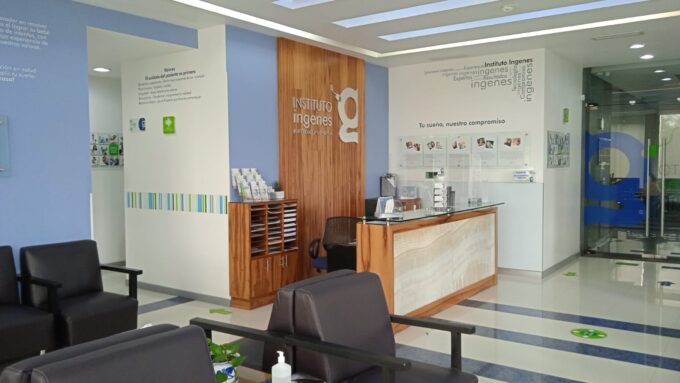
Guadalajara and the Beginning of the BEC Multi-Cycle Programs
One of the most important moments in the history of the Guadalajara branch was the creation of “Your Star At Home” (YSAH) Multi-Cycle Programs.
Today, within Ingenes, talking about multi cycle strategies and continuous support is a natural part of the fertility conversation. However, more than a decade ago, this approach was still uncommon in reproductive medicine.
In many places, fertility treatments were still experienced as isolated attempts, where all the emotional and financial pressure depended on “making it work the first time.”
In Guadalajara, a different vision began to emerge.
The BEC Multi-Cycle Programs were created from a clear idea: understanding that fertility should not always be approached as a single attempt, but rather as a structured medical strategy designed to increase success rates and reduce uncertainty throughout the process.
That shift in perspective was deeply important.
Because it not only changed the way programs were built within Ingenes. It also transformed the emotional experience for many patients, who for the first time felt there was a plan designed to support them beyond a single cycle.
Today, 13 years later, the YSAH model remains an important part of the Ingenes identity, and its origins are directly connected to Guadalajara.

A Branch That Also Helped Develop Talent
The growth of a clinic is not measured only by facilities or technology. It is also measured by the people who help build it every day.
Today, Ingenes Guadalajara has 51 team members, forming a multidisciplinary group involved in different parts of the reproductive process and patient support experience.
But beyond growing locally, Guadalajara also became a branch that helped develop talent for other cities.
From here, professionals have brought experience and leadership to other Ingenes locations, including Mexicali, Querétaro, and Puerto Vallarta.
That detail matters because it reflects something that has been essential to the institute’s growth: sharing knowledge, clinical experience, and a culture of patient care across branches to maintain the same standard of quality and support.
In other words, Guadalajara did not grow only for itself. It also helped strengthen the expansion of Ingenes into other regions of the country.
What Else Changed Over These 13 Years: Fertility in Mexico
Talking about an anniversary like this also means looking at how fertility has changed over the years.
More than a decade ago, many conversations that are common today were only beginning to emerge:
- Fertility preservation
- Motherhood after 35
- Male fertility factors
- Embryo genetics
- Personalized reproductive medicine
Today, the stories are different.
More and more people are postponing trying to have a baby for personal, professional, or financial reasons. There is also greater awareness around conditions such as endometriosis, low ovarian reserve, and sperm abnormalities that previously often went unnoticed.
At the same time, reproductive medicine evolved significantly.
Modern fertility treatment is no longer limited to achieving fertilization. Today, it involves deeper analysis, personalized strategies, genetic evaluation, advanced laboratory technology, and a much more comprehensive view of each case.
Throughout these 13 years, Guadalajara has been part of that evolution.
More Technology, But Also More Support
One of the most important changes in fertility treatment has not been only technological.
It has also been human.
Because behind every test, every laboratory, and every procedure, there are still people going through emotionally complex experiences, often after years of uncertainty.
That is why the growth of Ingenes Guadalajara has also meant strengthening support, follow-up, and patient care areas.
Today, trying to have a baby should no longer feel like walking through the process alone.
And that philosophy has been an important part of how this branch has been built since the beginning.
13 Years Later, the Story Continues to Grow
Over the years, Guadalajara has supported thousands of different stories.
Patients who arrived after failed attempts.
People who thought they no longer had options.
Women who decided to preserve their fertility for the future.
Couples who needed a different strategy to achieve pregnancy.
Each of those stories helped build what the branch represents today.
And although reproductive medicine has changed tremendously since then, one thing remains the same: the importance of continuing to evolve in order to better respond to what each patient truly needs.
Ingenes Guadalajara: 13 Years Building New Possibilities
Celebrating 13 years is not only about looking back.
It is also about understanding everything that continues to evolve in fertility treatment and how reproductive medicine keeps opening possibilities that once seemed far away.
From becoming the second Ingenes branch to serving as the birthplace of the BEC Multi-Cycle Programs, Guadalajara has played an important role in the history of the institute and in the way fertility support is understood today.
Because beyond growth, what truly matters is what exists behind every story: people still searching for answers, clarity, and a strategy that truly makes sense for their case.
And after 13 years, that continues to be the goal.