

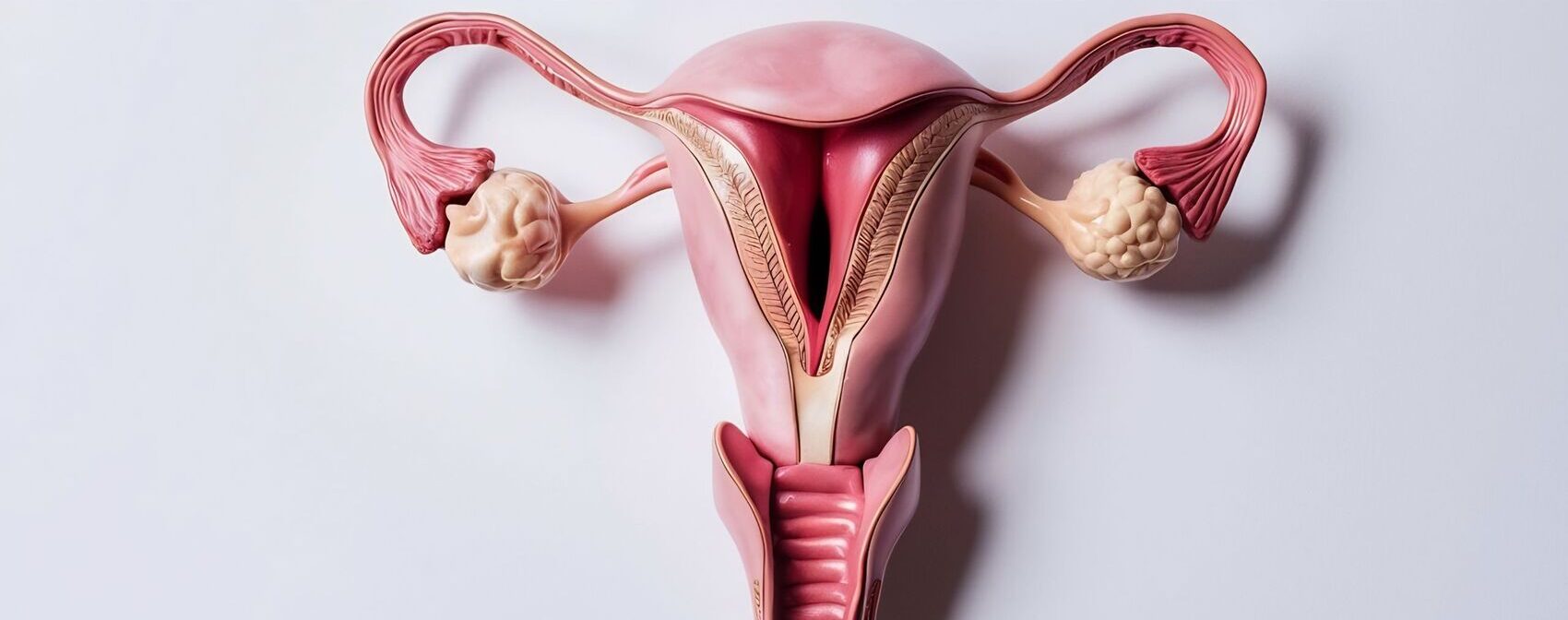
World Endometriosis Day is observed on March 14, and March is often dedicated to endometriosis awareness internationally.
Beyond the date, what matters is the very real issue it highlights: endometriosis is common, it can take years to diagnose, and for some women, it can directly affect fertility.
This article is designed to give you practical, verifiable information: what it is, which signs should raise a flag, how it’s confirmed, how it can affect trying to get pregnant, and how this can be supported through comprehensive, fertility-focused care.
What is endometriosis, and why can it be overlooked?
Endometriosis is a condition where tissue similar to the endometrium (the tissue that lines the inside of the uterus) is found outside the uterus. This “out-of-place” tissue responds to menstrual-cycle hormones and can become inflamed, bleed microscopically, and irritate nearby tissues. That helps explain why some women experience pelvic pain, very painful periods, cycle-related digestive symptoms, or pain with sex—and why others have mild symptoms or almost none.
It’s considered a common condition: medical sources and organizations cite figures close to 1 in 10 women of reproductive age.
What makes it challenging is that it isn’t always obvious and can be confused with other causes of pain or discomfort. There’s also a well-documented issue: diagnosis is often delayed for years in many countries, partly because period pain is normalized or symptoms are treated without investigating the cause.
Signs worth taking seriously (without assuming, but without minimizing)
Endometriosis isn’t diagnosed based on a single symptom—it’s based on a pattern. These are signs that, when frequent or severe, should prompt a targeted evaluation:
- Severe menstrual pain (dysmenorrhea) that limits your life: missing work/school, staying in bed, or relying on strong pain meds just to “function.”
- Pelvic pain outside your period, especially if it’s cyclical (worse before or during your period).
- Pain during or after sex (especially if it happens repeatedly).
- Cycle-related bowel or urinary symptoms: pain with bowel movements, diarrhea/constipation that worsens with your period, urinary discomfort that shows up at specific points in your cycle.
- Heavy menstrual bleeding or spotting, in some women.
- Infertility: endometriosis may be present even if the main symptom is “I can’t get pregnant.”
This isn’t about reading a list and concluding “I definitely have endometriosis.” It’s about recognizing that certain patterns shouldn’t be normalized—and if you’re also trying to have a baby, it’s worth evaluating with a fertility-focused approach.
Endometriosis and fertility: how it can affect trying to get pregnant
The connection between endometriosis and infertility is real, but it’s not a simple equation of “I have endometriosis = I won’t be able to.” What changes is the overall picture—and therefore, the strategy.
In general terms, endometriosis can affect fertility through several pathways:
- Pelvic inflammation and changes to the reproductive “environment”
Ongoing inflammation can interfere with delicate processes such as egg pickup by the fallopian tube, normal tubal movement, or sperm–egg interaction. - Adhesions and anatomical changes
Some women develop adhesions (bands of scar-like tissue) that can alter the relationship between the ovaries and fallopian tubes, making the egg’s natural path more difficult. - Endometriomas (ovarian cysts)
Endometriomas can affect ovarian tissue and, depending on the case, may be associated with lower ovarian reserve or a lower ovarian response. This isn’t assumed—it’s evaluated with ultrasound, history, and hormone testing when appropriate. - Pain and sex life
If sex becomes painful or emotionally difficult, the frequency of attempts may decrease. This isn’t “just psychological”—it’s a practical consequence of symptoms and should be considered in the overall plan.
Why “strategy” matters more than the diagnosis itself
Two women can have endometriosis and need very different paths. What defines the approach is the full context: age, how long you’ve been trying, ovarian reserve, presence or absence of endometriomas, tubal status, semen quality, history of pregnancy loss, and prior treatments.
In fertility-focused care like the approach used at Ingenes, the goal isn’t to talk about endometriosis in the abstract—it’s to answer very specific questions:
- Is endometriosis affecting my fallopian tubes or ovaries?
- Am I ovulating appropriately, and what does my ovarian reserve look like?
- Are there other factors at the same time (male factor, uterine, hormonal) that also need attention?
- Which path gives me the best chances given my timeline and my history?
That’s the difference between living with doubts and moving forward with direction.
How endometriosis is confirmed and evaluated when the goal is pregnancy
This is where many women feel frustrated: “They told me it was normal,” “They gave me something for pain,” “They said it can’t be seen on ultrasound.” The reality is more nuanced.
A clinical evaluation often includes:
1) A well-directed medical history (this is key)
This isn’t a formality. It’s where the pattern shows up: the type of pain, when it happens, intensity, relationship to your cycle, bowel/urinary symptoms, pain with sex, surgical history, infections, prior pregnancies or losses, how long you’ve been trying, and any prior treatments.
A good history guides what to look for and which tests are truly worth doing.
2) Transvaginal ultrasound with an endometriosis and fertility focus
Transvaginal ultrasound is an important tool. It can identify endometriomas and, in experienced hands, suggest findings compatible with deep endometriosis in some cases. It also helps evaluate the uterus and ovaries from a fertility perspective (anatomy, follicles, possible fibroids or polyps, etc.).
3) Additional testing based on your case (so you’re not guessing)
Depending on clinical suspicion and your reproductive goal, this may include:
- tubal evaluation (when it’s important to know whether there’s a tubal factor),
- hormone testing (to understand ovulation/ovarian reserve when needed),
- tests to evaluate the uterine cavity, if your history or symptoms suggest it,
- male factor testing, because it’s a core part of a complete workup.
The goal isn’t “to do everything.” It’s to do the right things to answer the main question: what’s affecting the outcome and how to adjust the plan.
4) Surgical confirmation (when appropriate)
In medicine, laparoscopy has been considered a method to confirm endometriosis, but not every patient needs it to make reproductive decisions. Whether it’s indicated depends on symptoms, imaging findings, and your goals.
In practical terms: what matters is not the “most complex” method, but what is most useful and safest for your history and your plan for pregnancy.
How a comprehensive plan can help when endometriosis is suspected or diagnosed
Effective support shows up in concrete ways:
- It organizes the diagnosis: you stop treating “separate symptoms,” and everything is integrated into a clinical explanation.
- It reduces trial-and-error: you follow a path with goals and decision points (what to evaluate first, what to adjust, when to change strategy).
- It integrates female and male fertility: because outcomes depend on the full picture, not just one side.
- It protects your timeline: especially if you’ve been trying for a while or if timing may influence strategy.
- It gives you realistic options: without empty promises and without unnecessary delays.
One more important point: endometriosis isn’t experienced only as a “diagnosis.” Many women experience it as pain, fatigue, frustration, or a constant “why is this happening?” A comprehensive plan also considers that wear and tear so the process is more manageable while you move toward your goal of having a baby.
Conclusion
World Endometriosis Day (March 14) is a useful opportunity to revisit the essentials: severe period pain, cyclical pelvic pain, digestive symptoms tied to the cycle, or pain with sex shouldn’t be normalized. And if you’re also trying to have a baby and haven’t been able to, it’s worth evaluating with a fertility-focused approach—because endometriosis can affect fertility in different ways.The most important takeaway is this: with a complete evaluation and a well-guided strategy, it’s possible to move forward with clarity. If you recognized yourself in several of these points, the next step is simple and practical: schedule an appointment, review your history and any prior test results (if you have them), and build a plan that’s truly designed to help you have your baby.