

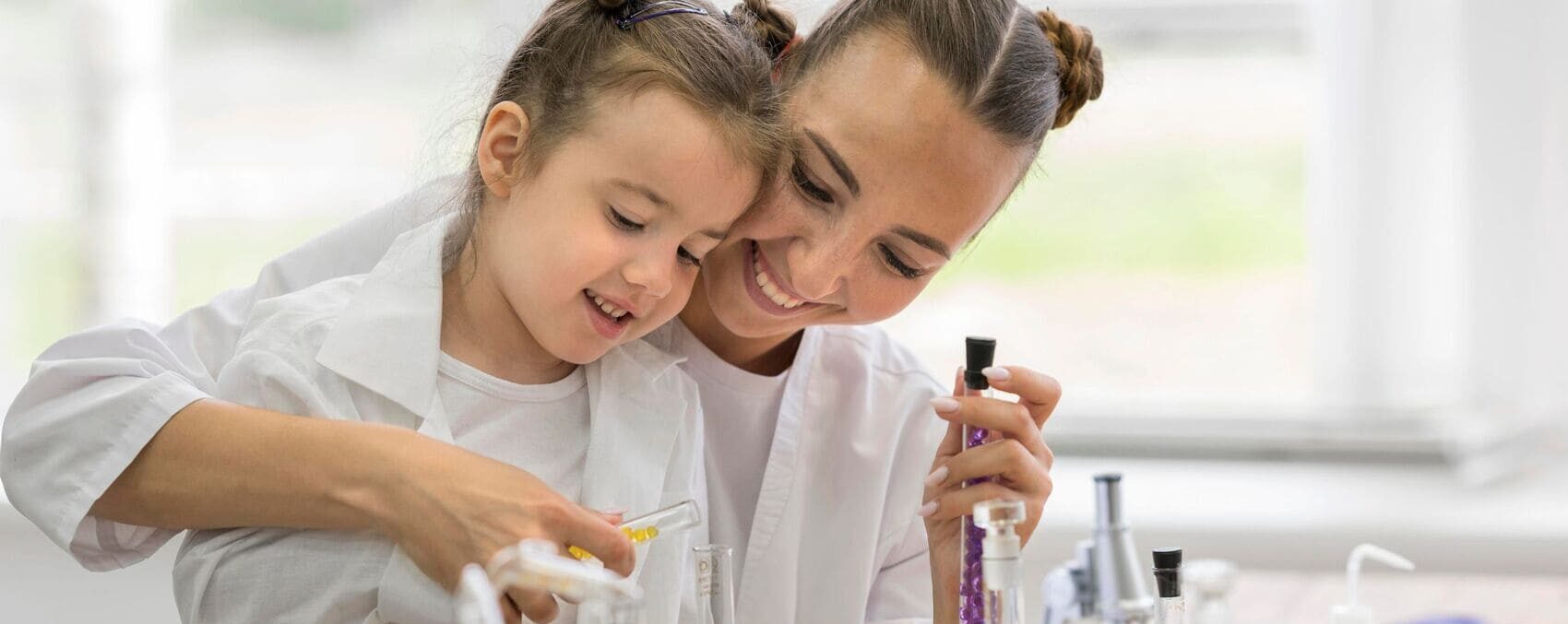
Every medical advance that today makes it possible to offer a real chance to have a baby shares one common origin: science. And at the heart of that science, throughout history, there have been women who dedicated their lives to knowledge, research, and innovation.
On February 9, International Day of Women and Girls in Science, is an opportunity to recognize their impact, especially in a field where science changes life stories every day: assisted reproduction.
For decades, fertility was an area filled with silence, myths, and incomplete answers. Thanks to scientific work—often led by women—today there are more accurate diagnoses, more advanced labs, and options that make it possible to support those who want to have a baby with information, ethics, and real possibilities.
Talking about women in science is also talking about fertility, genetics, biology, and reproductive medicine. Because without their contributions, many of the paths that exist today simply would not be possible.
Why Is International Day of Women and Girls in Science Commemorated?
International Day of Women and Girls in Science was proclaimed by the United Nations to highlight the historic gender gap in access, participation, and scientific leadership. For many years, women faced barriers to studying, researching, and developing professionally in scientific disciplines.
Today, although challenges still exist, their presence in science is indispensable. In areas such as biology, genetics, and reproductive medicine, women do not only participate: they lead, research, and transform the way reproductive health is understood.
This commemoration is not only meant to celebrate achievements, but to remember that scientific progress needs a diversity of perspectives, experiences, and approaches to generate truly human solutions.
Women and Science: A Key Alliance in Assisted Reproduction
Assisted reproduction is one of the fields where applied science has the most direct impact on people’s lives. Every approach, every genetic test, and every clinical decision is supported by years of scientific research.
In this field, women have been fundamental to:
- Deepening knowledge of the female reproductive cycle.
- Understanding the impact of age on egg quality.
- Developing more precise criteria for embryo selection.
- Integrating genetics as a key tool in decision-making.
- Humanizing clinical and laboratory processes.
Thanks to these contributions, fertility is now approached more comprehensively, considering not only the medical outcome, but also the emotional well-being of those going through these processes.
Women Who Made Advances in Fertility Possible
Throughout the history of reproductive science, many women have contributed decisively to making safer and more effective treatments available today. Researchers, biologists, geneticists, and reproductive physicians have worked to answer questions that for years had no explanation.
Their work made it possible to:
- Understand how fertilization occurs at the cellular level.
- Analyze embryo development in the lab.
- Identify genetic alterations before transfer.
- Design more personalized protocols based on each diagnosis.
These advances represent not only scientific progress, but hope for thousands of people seeking to build a family.
The Role of Women Scientists in Fertility Labs
Assisted reproduction labs are spaces where science happens every day. In them, biologists and embryologists play a fundamental role at every stage of the process.
Their work includes:
- Handling and caring for gametes and embryos.
- Monitoring embryo development.
- Applying scientific criteria for decision-making.
- Using high-precision technology.
- Interpreting complex genetic tests.
But beyond the technical side, their work involves enormous ethical responsibility. Every decision in the lab can directly influence the possibility that a person will be able to have a baby. That’s why fertility science cannot be understood without human commitment.
Science With a Human Perspective: A Key Contribution From Women
One of the great contributions of women in science applied to fertility has been integrating a more empathetic, person-centered perspective. Assisted reproduction is not only a medical procedure; it is a process that involves emotions, expectations, and profound decisions.
From research to clinical care, many women scientists have advanced:
- Protocols that are more respectful of the body.
- Clear communication with patients.
- Emotional support as part of the process.
- Informed and ethical decision-making.
This approach has made it possible for science to pursue not only results, but also safety, clarity, and confidence for those undergoing fertility treatment.
Women Leading the Future of Fertility
Today, more and more women hold leadership positions in the field of assisted reproduction. They lead labs, head research lines, build medical teams, and participate in developing new clinical strategies.
Their leadership is key because it:
- Brings diversity to decision-making.
- Drives constant innovation.
- Strengthens scientific ethics.
- Ensures more comprehensive care.
Fertility today and in the future is built with science, but also with female leadership that understands the real impact of every advance.
Inspiring Girls and Young Women to Transform Tomorrow’s Science
International Day of Women and Girls in Science is also an invitation to look toward the future. Showing that there are women leading advances in biology, genetics, and assisted reproduction makes it possible for girls and young women to imagine themselves as part of that path.
Fertility is a field where science transforms lives. Every scientific vocation encouraged today can become an innovation tomorrow that changes someone else’s story.
Encouraging interest in science not only expands professional opportunities, but also ensures that research continues to evolve with diverse and committed perspectives.
Science as an Ally for Those Who Want to Have a Baby
In assisted reproduction, science does not rush decisions; it supports them. It makes it possible to understand the body, identify diagnoses, and design strategies aligned with each story.
Women scientists have been key to making it possible for fertility to be approached through:
- More accurate diagnoses.
- Personalized options.
- Ethical and responsible approaches.
- Comprehensive support.
Thanks to their work, paths exist today that were not available before.
Women, Science, and Fertility: The Knowledge That Makes It Possible to Move Forward
International Day of Women and Girls in Science is an opportunity to look to the future and recognize those who, through their knowledge, are building it. At Ingenes, science is not an abstract concept: it is the daily work of women who research, analyze, diagnose, and support, with the commitment to offer real options to those who want to have a baby.
Behind every lab, every genetic test, and every medical strategy, there are women who have dedicated their lives to understanding biology, refining processes, and applying science with responsibility and human sensitivity. Thanks to them, assisted reproduction has not only advanced, but today it can adapt to complex stories, different needs, and deeply personal decisions.
Closing this date from Ingenes is recognizing that science takes on true meaning when it is put at the service of people. And that many of the possibilities that exist today to have a baby are born from the knowledge, ethics, and vocation of women who, through science, continue opening paths where there used to be questions.