

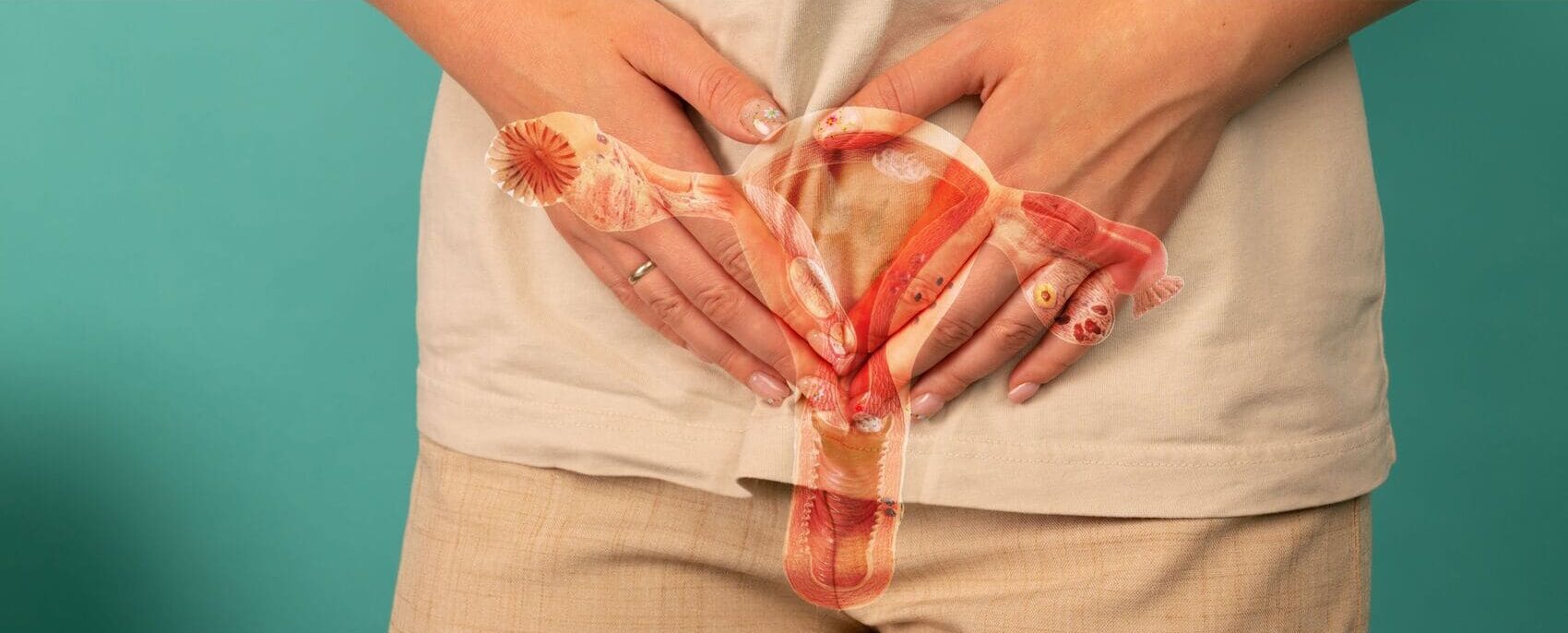
There are discomforts that, over time, become part of your routine. You learn to “push through,” to carry painkillers in your bag, to cancel plans when you’re on your period, to think that this is just how your body is. Sometimes you don’t even call it pain—you call it “my bad period,” “my heavy cycle,” “women’s stuff.”
And meanwhile, something else is happening: you’re trying to have a baby… and it’s not happening.
At Ingenes, we often see similar stories: women who have lived for years with signs that became “normal,” and then arrive with a question that feels heavy: “What if this has something to do with why I can’t get pregnant?” In many cases, the answer is yes: endometriosis can be part of the puzzle. But it’s also important to say this from the start: when it’s identified early and addressed with the right plan, it is possible to move forward toward your baby.
This note isn’t meant to alarm you. It’s meant to give you clarity. So you can recognize signs that deserve attention and, above all, so you know that at Ingenes there is an organized path to evaluate you and support you with a strategy.
What Is Endometriosis and Why Is It Called a “Silent” Condition?
Endometriosis happens when tissue similar to the endometrium (the lining inside the uterus) grows outside the uterus. That tissue responds to cycle hormones: it becomes inflamed and can cause irritation, adhesions, and pain.
It’s called “silent” not because it doesn’t cause symptoms, but because many times symptoms are lived in silence: they’re minimized, justified, or become part of what feels “normal” for years.
Why It’s So Easy to Normalize
- Because for a long time people have said, “periods hurt,” end of story.
- Because the pain can be intermittent: some months are worse and others are more manageable.
- Because it can be confused with colitis, gastritis, urinary infections, or stress.
- Because some women have endometriosis with few symptoms… and the first real warning shows up when pregnancy doesn’t happen.
“Silent” Signs Many Women Normalize (and That Are Worth Reviewing at Ingenes)
Endometriosis doesn’t show up the same way for everyone. But there are signs that, when they repeat or intensify, deserve a complete evaluation.
Period Pain That Changes Your Life
We’re not talking about mild discomfort. We’re talking about pain that:
- Makes you miss work or commitments.
- Forces you to organize your life around certain days.
- Leaves you in bed or causes nausea or dizziness.
- Makes you rely on painkillers just to “function.”
If your period disables you, it’s not something you should normalize. At Ingenes, this kind of pain is taken seriously from the first evaluation.
Pelvic Pain Outside Your Period
Another common sign is pain in the lower abdomen:
- On “normal” days, outside your period.
- As constant pressure or intermittent stabbing pain.
- That worsens before your period starts or during ovulation.
That pain that “comes and goes” can be an important clue when you’ve been trying to have a baby for some time.
Pain During Sex
This symptom is more common than people think, and many women don’t mention it out of embarrassment or because they assume it’s “just part of life.” And it isn’t.
When there is pain during or after sex, especially if it’s recurrent, it’s a sign that at Ingenes is evaluated.
Intestinal or Urinary Symptoms That Behave Like Clockwork
Endometriosis can cause signs that seem digestive or urinary:
Intense bloating.
Pain with bowel movements close to the day your period starts.
Diarrhea or constipation that gets worse on certain days.
Discomfort when urinating on very specific dates in the cycle.
If these symptoms repeat in a cyclical pattern, it’s worth reviewing as part of a comprehensive evaluation.
Heavy Bleeding or Spotting
In some women there may be:
- Very heavy periods.
- Spotting between periods.
- Frequent clots.
This doesn’t confirm endometriosis on its own, but it is a sign to take a closer look at the uterus and pelvic environment in more detail.
Extreme Fatigue (Especially Around Your Period)
Many women with endometriosis describe fatigue that feels different: a heavy body, low energy, a sense of exhaustion that can’t be explained only by “doing a lot.”
Repeated pain, inflammation, and the emotional strain of living with untreated symptoms can affect you more than you might imagine.
How Can Endometriosis Impact Getting Pregnant?
This is where many women worry, and that’s why it’s important to say it clearly: having endometriosis doesn’t mean you can’t have your baby. It means the path may require a more specific plan.
Inflammation and a Less Favorable Environment
Chronic inflammation can affect the pelvic environment and make it harder for the egg and sperm to meet naturally, or for the earliest steps to happen under the best conditions.
Adhesions and Changes in the Tubes or Ovaries
In some cases, endometriosis causes adhesions (scar tissue) that can:
- Change the position of the ovaries and tubes.
- Make it harder for the egg to travel.
- Affect normal tubal function.
Endometriomas (Ovarian Cysts)
Endometriomas can affect ovarian tissue. Depending on size, location, and context, they can influence ovarian reserve or ovarian response.
Pain, Frequency of Attempts, and Emotional Load
When there is pain, or fear of pain, or painful sex, trying to get pregnant can become emotionally heavy. And that matters too. At Ingenes, this is taken into account because the process isn’t only physical—it’s also emotional.
Implantation and the Endometrium (Depending on Each Case)
In certain scenarios, endometriosis may be associated with changes that affect implantation. That’s why the plan isn’t improvised: it’s built through a complete evaluation and a strategy.
Why Do So Many Women Take So Long to Get a Diagnosis?
Because for years they were told the pain was normal. Because their symptoms seemed “digestive” or “urinary.” Because there were treatments that only covered up the signal without investigating the cause.
How Do We Evaluate Endometriosis at Ingenes?
At Ingenes, the evaluation has a very clear goal: to understand whether there is endometriosis, how much it is affecting you, and what the most efficient path is to bring you closer to your baby.
Your Medical History Matters (and Here, It’s Fully Heard)
The type of pain, when it appears, how it changes with your cycle, surgical history, cyclical digestive symptoms, how long you’ve been trying… it all adds up to guide a responsible diagnosis.
Transvaginal Ultrasound With a Fertility Focus
An ultrasound helps evaluate the uterus and ovaries in detail and, in some cases, identify compatible findings or other relevant information.
Additional Tests Depending on the Case
Depending on what we find in the visit and ultrasound, the team may recommend tests to assess the tubes, the uterine cavity, or other factors that also affect things when pregnancy doesn’t happen.
What matters is that at Ingenes, it’s not about doing “a lot of tests” just to do them. It’s about doing the right ones for your case and for your goal.
If I Have Endometriosis, What Options Exist to Get Pregnant?
Here comes the most important part: yes, there are paths, and you don’t have to stay stuck with the idea that endometriosis “closes doors” for you. When this diagnosis is present, what makes the difference is having a complete evaluation and a well-guided plan, because not all endometriosis affects fertility in the same way, nor does it require the same approach.
With specialized care like the kind provided at Ingenes, the goal is to help you move forward more clearly and efficiently: understand how much endometriosis is influencing your case, review factors that may be associated (such as tubes, ovaries, ovulation, and uterus) and, with that information, define the route that brings you closest to your baby.
That can mean adjusting timing, prioritizing key tests, and choosing a medical strategy that increases your chances without making you go in unnecessary circles. The focus is always the same: moving from uncertainty to a real plan, with close support and decisions based on your story and your results. Because yes: even with endometriosis, having your baby is possible, and with the right path, it can feel much more within reach.
Conclusion
If you’ve been trying to have a baby for some time and you feel like your body is sending you signals you’ve had to normalize, this is important: disabling period pain, pelvic pain, cyclical intestinal discomfort, or pain during sex are not “something you just have to deal with.” They can be signs of endometriosis, and recognizing them can completely change the course.At Ingenes, the goal isn’t to give you a diagnosis and send you home with more fear. It’s to give you clarity, support, and a real plan focused on what matters most to you right now: having your baby. If something you read here resonated with you, the next step isn’t to stay with the doubt. The next step is to schedule your evaluation at Ingenes, review your history with a specialized team, and build—step by step—the most efficient path so your baby can be possible.