

For many people trying to have a baby, there is one question that feels almost impossible not to ask:
Can you actually feel the exact moment when the egg and sperm meet?
It is a deeply emotional idea. Thinking that, at one precise moment inside the body, the very first step of a new life begins. And when someone is trying to get pregnant, every sensation, cramp, physical change, or symptom can suddenly feel important.
But medically, the answer is no: natural fertilization cannot be physically felt.
When the sperm reaches the egg and fertilization happens naturally, the process takes place on a microscopic level inside the fallopian tube. There are no nerve endings capable of sending a signal to the brain indicating that exact moment. The body does not “announce” that fertilization has just happened.
And yet, modern reproductive medicine changed something extraordinary about this conversation.
Because while natural pregnancy happens silently and invisibly inside the body, assisted reproduction now allows specialists to identify, observe, and even document the precise moment fertilization occurs.
For the first time in history, science has made it possible to observe one of the earliest moments of life with remarkable precision.
What Really Happens During Fertilization
To understand why this moment cannot be physically felt, it is important to first understand what fertilization actually is.
After ovulation, the egg is released from the ovary and enters the fallopian tube. At the same time, millions of sperm begin traveling through the reproductive tract trying to reach it.
Even though there are so many sperm, only a very small number make it close to the egg.
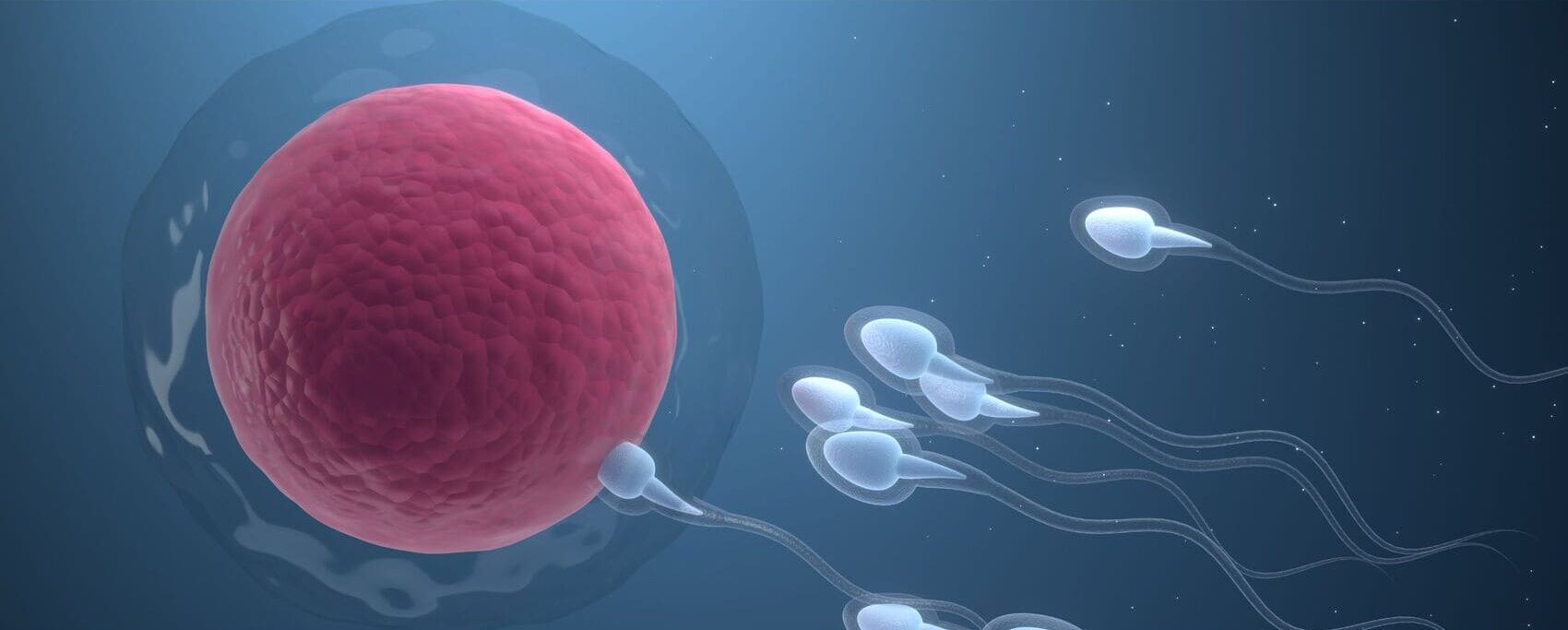
Then, after an extremely complex biological process, a single sperm successfully penetrates the outer layer of the egg. At that moment, the genetic material from both cells combines and forms what is known as a zygote, the first cell of a future embryo.
All of this happens on a microscopic level.
There is no physical explosion, immediate sensation, or specific symptom caused by fertilization itself.
In fact, many of the early symptoms people associate with pregnancy do not come from fertilization itself, but from later processes related to implantation and hormonal changes.
So Why Do Some People Think They Felt It?
Even though fertilization cannot be physically felt, many people truly believe they noticed something at the moment of conception.
And that experience is completely understandable.
When someone is trying to get pregnant, they often become much more aware of their body:
- Ovulation discomfort
- Hormonal changes
- Pelvic pressure
- Bloating
- Breast tenderness
- Mild cramping
And because fertilization usually happens within hours after ovulation, it is easy to emotionally connect those sensations with the moment the sperm met the egg.
But medically, those sensations are usually more related to:
- Ovulation
- Progesterone changes
- Uterine activity
- Normal menstrual cycle symptoms
- Emotional anticipation and anxiety
The union between the egg and sperm remains biologically silent.
At least in a natural pregnancy.
How Assisted Reproduction Completely Changed This Story
One of the most fascinating aspects of modern reproductive medicine is that fertilization no longer has to remain completely invisible.
With assisted reproduction, specialists can identify the exact moment fertilization occurs.
And in some cases, they can even observe the earliest stages of embryo development hour by hour.
That is why fertility laboratories have become such an important part of assisted reproduction.
Inside a high complexity laboratory, fertilization stops being something that specialists simply “assume happened.” It becomes something that can be scientifically confirmed, analyzed, and monitored.
And for many patients, that completely changes the experience.
Because after years of uncertainty, questions, or failed attempts, being able to know exactly what is happening during fertilization provides a completely different level of clarity.
What Happens During IVF Fertilization
During an In Vitro Fertilization (IVF) treatment, eggs are retrieved directly from the ovaries after ovarian stimulation.
Then, inside the laboratory, embryologists carefully prepare the sperm sample and allow the sperm and egg to meet under controlled conditions.
Depending on the case, fertilization may happen through:
- Conventional IVF, where sperm naturally fertilizes the egg inside the laboratory
- ICSI (Intracytoplasmic Sperm Injection), where a single sperm is injected directly into the egg
And this is where science becomes truly extraordinary.
Unlike natural pregnancy, IVF allows specialists to observe whether fertilization actually occurred.
Usually, around 16 to 18 hours later, specialists evaluate the eggs to confirm the presence of pronuclei, structures that indicate the genetic material from the egg and sperm combined correctly.
In other words, science can now identify the exact beginning of embryo formation.
Time Lapse Technology: Watching Life Begin
One of the most important advances in assisted reproduction has been the development of Time Lapse incubators.
These specialized incubators continuously photograph embryo development without removing embryos from their protected environment.
This allows specialists to observe:
- The exact moment fertilization occurs
- The first cellular divisions
- Embryo development patterns
- Growth behavior over time
Instead of seeing only isolated images, embryologists can follow embryo development almost like watching a video sequence.
And that level of observation matters enormously.
Because embryo development does not happen randomly. The timing and patterns of cell division can provide valuable information about embryo quality and developmental potential.
For many patients, this also deeply transforms the emotional experience of treatment.
Because for the first time, the beginning of life no longer happens completely out of sight.
Why This Is So Emotionally Important
Infertility is often filled with uncertainty.
Many people spend years asking themselves:
- Are my eggs actually fertilizing?
- Is the problem happening during fertilization?
- Are the embryos developing correctly?
- Is implantation the issue?
- Is there something doctors still have not detected?
And emotionally, one of the hardest parts is simply not knowing where the problem is happening.
That is why assisted reproduction evolved far beyond simply “helping sperm reach the egg.”
Today, the goal is to understand the entire process more deeply.
Modern reproductive medicine allows specialists to analyze:
- Egg quality
- Sperm quality
- Fertilization rates
- Embryo development
- Chromosomal health
- Endometrial receptivity
- Hormonal and metabolic factors
This more comprehensive approach helps transform uncertainty into information.
And for many people, information also becomes hope.
Fertilization Is Only the Beginning
One of the most common misconceptions is believing that fertilization automatically guarantees pregnancy.
In reality, fertilization is only one of many steps within an extremely complex process.
For a pregnancy to happen successfully:
- The egg must be healthy
- The sperm must contribute healthy genetic material
- Fertilization must develop correctly
- The embryo must continue evolving
- Implantation must occur at the right moment
- The uterus must be prepared to receive it
That is why some people become pregnant easily while others continue facing difficulties even when fertilization does occur.
And that is exactly why modern assisted reproduction no longer focuses only on helping the egg and sperm meet.
Today, the goal is to analyze every stage of the process with much greater precision.
At Ingenes, fertility is evaluated through a comprehensive approach.
Because sometimes the challenge is not simply getting the sperm to reach the egg. Sometimes the difficulty may involve embryo quality, genetics, endometrial receptivity, hormonal factors, or multiple elements that require a deeper evaluation.
The Science Behind an Invisible Moment
There is something fascinating about the fact that one of the most important moments in human life happens completely in silence.
Without sound.
Without an immediate signal.
Without a specific physical sensation.
And yet, within a microscopic interaction between two cells, a completely new genetic identity begins to exist.
That is what makes fertilization both an incredibly precise biological process and a deeply emotional moment.
Today, reproductive medicine allows specialists to observe this process with a level of detail previous generations could never have imagined.
From advanced laboratories to embryo monitoring systems, specialists can now analyze and better understand the earliest stages of life.
And for people experiencing infertility, that can make an enormous difference.
Because when someone spends years searching for answers, understanding what is happening inside the process can completely transform the experience.
Ingenes: Understanding One of Life’s Most Important Moments With Precision
Natural fertilization cannot be physically felt.
But thanks to advances in assisted reproduction, it is now possible to scientifically identify and monitor the exact moment fertilization occurs and embryo development begins.
That level of precision has completely transformed fertility care.
Today, assisted reproduction is no longer only about “continuing to try.” It is about understanding more deeply:
- What is happening
- Where difficulties may exist
- How embryos are developing
- Which strategies may help improve the chances of pregnancy
At Ingenes, technology, laboratory innovation, and personalized care work together to offer something incredibly valuable during this process: clarity.
Because many times, understanding what is truly happening is the first step toward finally moving closer to the possibility of having a baby.