

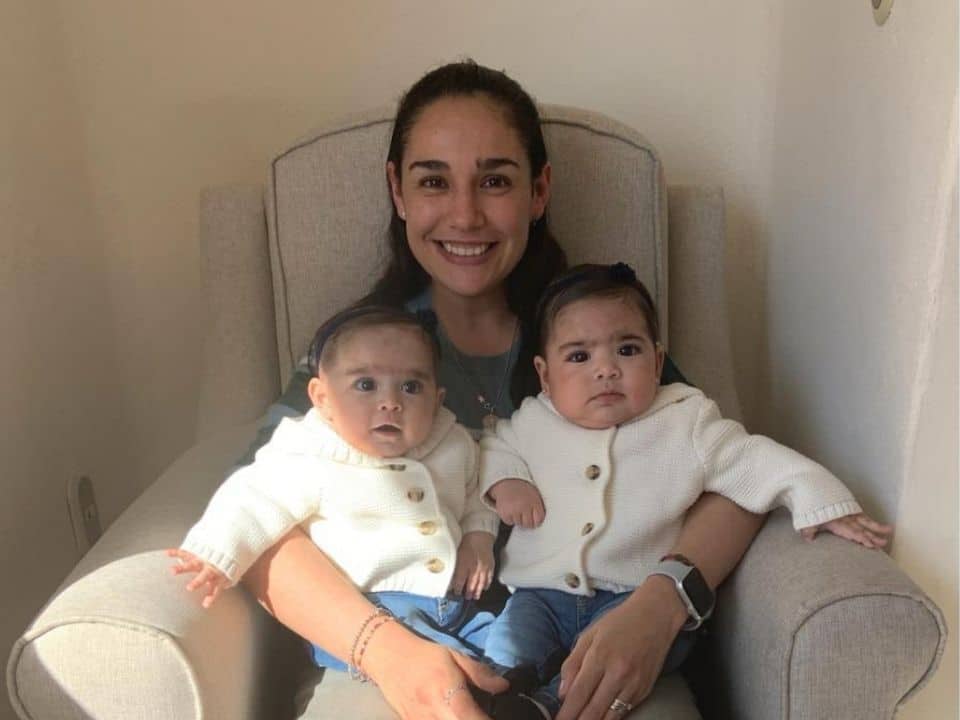
Fernanda achieved her pregnancy despite having polycystic ovary syndrome thanks to in vitro fertilization treatment over several cycles. She is among 6 to 10% of Mexican women of reproductive age, and here she shares her experience.
What is polycystic ovary syndrome and how does it affect fertility?
Polycystic ovary syndrome (PCOS) is a hormonal disorder that causes irregular or absent menstrual cycles, high androgen levels, and multiple small cysts in the ovaries. These imbalances hinder ovulation, making it one of the leading causes of infertility. It can also cause acne, excessive hair growth, and weight gain, and often prevents the release of mature eggs each month.
- Irregular menstrual cycles (oligomenorrhea or amenorrhea)
- Infertility due to lack of ovulation
- Skin issues: acne and excessive hair growth
- Multiple 2–9 mm follicles visible on ultrasound
How can women over 35 with PCOS conceive?
In women over 35 with PCOS, ovarian reserve and egg quality tend to decline. However, with personalized stimulation protocols and IVF programs tailored to each case, success rates increase significantly. According to this study, adjusting doses based on AMH and AFC optimizes ovarian response and embryo yield.
Treatment options for PCOS-related infertility
Initial steps include lifestyle changes: maintain a healthy BMI (18.5–24.9), follow a balanced diet, and engage in at least 150 minutes of moderate exercise per week. Medications like clomiphene citrate or letrozole are used to induce ovulation. If these fail after 3–6 cycles, gonadotropin injections and controlled stimulation for IVF are recommended. Do not self-medicate without medical supervision.
What to expect in an IVF cycle with PCOS?
An IVF cycle starts with ultrasound and hormone tests to determine the gonadotropin dose (150–300 IU of daily FSH). Monitoring is done every 2–3 days to avoid ovarian hyperstimulation syndrome (OHSS). When follicles are mature, 10,000 IU of hCG is administered, and 36 hours later, eggs are retrieved. Finally, 1–2 embryos are transferred under ultrasound guidance. The entire process is under specialized 24/7 supervision.
Still haven’t achieved pregnancy with PCOS?
If you identify with Fernanda’s story and have polycystic ovary syndrome, know that success rates exceed 70% with the right plan. At Ingenes we design your assisted reproduction program (ovarian stimulation, IVF or ICSI) 100% personalized to your history and ovarian reserve.
With our Initial Program we evaluate your hormones, ultrasound, and genetic factors to define the best protocol. You are not alone: millions of women conceive each year with PCOS. “Can I get pregnant with PCOS? Yes, I did!”
Frequently Asked Questions
1. Can PCOS be “cured” to improve fertility?
There is no definitive cure for PCOS, but its symptoms and metabolic effects can be controlled. Losing 5–10% of body weight can restore ovulation and reduce androgens. Medications like metformin improve insulin sensitivity, and letrozole or clomiphene help trigger ovulation. Combining lifestyle changes and drugs, up to 80% of ovulatory cycles can be achieved.
If initial therapy is insufficient, controlled stimulation and IVF achieve pregnancy rates of 50–60% per cycle. Early diagnosis and a tailored protocol are key.
2. What risks does PCOS pose during pregnancy?
PCOS increases the risk of gestational diabetes, preeclampsia, and preterm birth. A glucose tolerance test is recommended at 24–28 weeks, along with blood pressure checks and fetal growth ultrasounds every 4 weeks from week 28.
Joint monitoring by maternal-fetal medicine and endocrinology, plus aspirin (75–150 mg/day) from week 12, reduces these risks. Most women with PCOS have healthy babies with specialized care.
3. How long to try natural conception before seeking help?
If you are under 35 and have been trying for more than 12 months without success, or over 35 and it’s been 6 months, seek medical evaluation. Tests for AMH, FSH, LH, TSH, prolactin, and antral follicle count guide treatment.
Time matters: ovarian reserve declines by about 5% each year after 35. Acting quickly improves egg quality and pregnancy chances.
4. Are there complementary therapies to support PCOS treatment?
Acupuncture, vitamin D, and myo-inositol (2 g) plus D-chiro-inositol (50 mg) twice daily can support ovulation and metabolism. Anti-inflammatory diets rich in omega-3, low–glycemic carbohydrates, and antioxidants reduce insulin resistance.
These options are complementary, not a substitute for medical care. Always consult your reproductive endocrinologist before adding supplements.
References
- American College of Obstetricians and Gynecologists. (2020). Practice Bulletin No. 194: Polycystic Ovary Syndrome. Obstetrics & Gynecology, 135(6), e297–e313. https://doi.org/10.1097/AOG.0000000000003894
- National Institute of Child Health and Human Development. (2017). PCOS: Overview. NIH. https://www.nichd.nih.gov/health/topics/pcos
- MedlinePlus. (2023). Polycystic Ovary Syndrome. U.S. National Library of Medicine. https://medlineplus.gov/pcods.html
- Teede, H. J., Misso, M. L., Costello, M. F., Dokras, A., Laven, J., Moran, L., … & Norman, R. J. (2018). Recommendations from the international evidence-based guideline for the assessment and management of polycystic ovary syndrome. Fertility and Sterility, 110(3), 364–379.e25. https://doi.org/10.1016/j.fertnstert.2018.05.004
Remember: every story is unique, and the path to parenthood can have ups and downs. It is always advisable to have the support of an assisted reproduction specialist who will design a personalized plan for you.