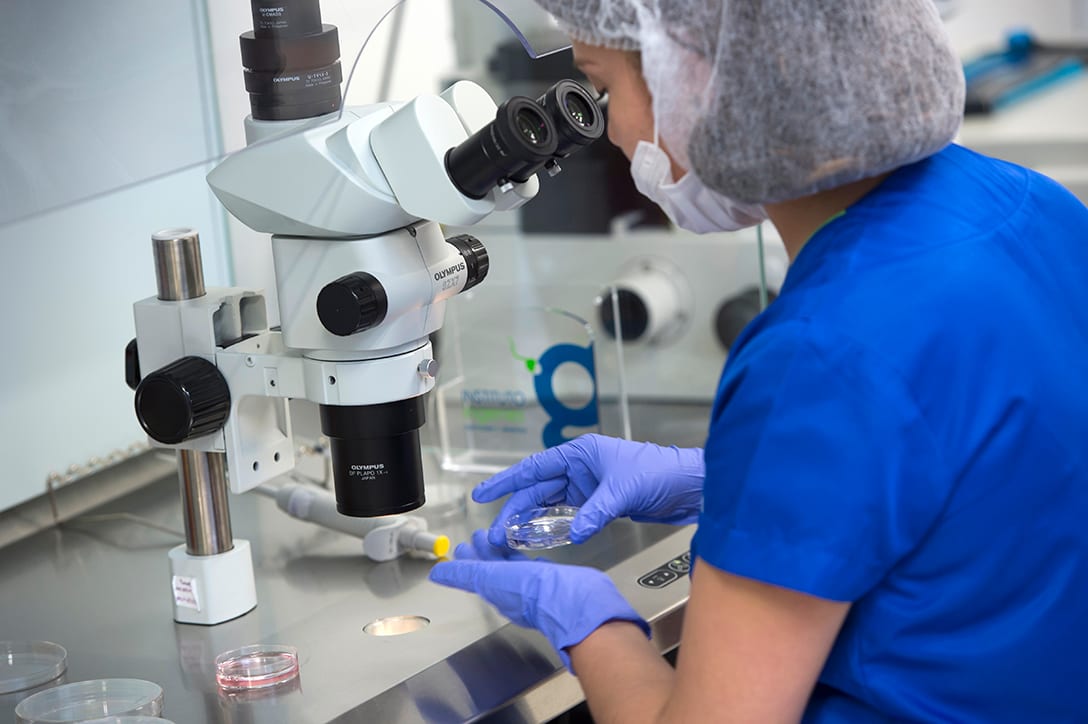

New year, a new opportunity to achieve your dream of having a baby
Each of the 365 days of the year gives you a new opportunity to fulfill your dream of becoming a mom or dad.
With the end of a year we leave behind stumbles, frustration, and sadness, and welcome a cycle that renews hope. Each of those days is a unique chance to get closer to the arrival of your baby.
This new beginning invites you to explore the best treatment options, to take care of your reproductive and emotional health, and to surround yourself with the necessary support to achieve your goal.
How to prepare this new year for an assisted reproduction treatment?
Beyond your New Year’s resolutions, making small changes can make a big difference in your physical and mental health. Start with these tips from our specialists:
Take care of your body: what to eat and what to avoid
To optimize your fertility, follow a balanced diet with leafy greens, lean proteins, whole grains, and drink 2 L of water daily. Incorporate omega-3 (salmon, walnuts) and eliminate trans fats. Exercise at least 150 min/week of moderate activity and avoid tobacco, alcohol, and drugs.
Love and respect yourself: how to manage your emotions
Infertility can generate anger, sadness, or frustration. Don’t blame yourself: the path to conception depends on multiple factors and there is a solution for every story. Try mindfulness, keep a journal, or seek emotional therapy to release tension.
Share your experience: the importance of support
Talking about your fertility journey connects you with people who understand your reality. A group of friends, family, or support forums relieve stress and keep your spirits high during treatments.
When to consult a specialist?
If you are under 35 and have been trying for more than 12 months, or if you are over 35 and it has been 6 months, it’s time to visit a fertility specialist. Early diagnosis identifies possible causes and guides you toward the appropriate protocol.
You can take the first step to fulfill your dream of having your baby at home. If you seek more personalized guidance, explore Your Star at Home: More Opportunities to Have Your Baby and discover new paths to parenthood.
What to do if you’ve been trying for over a year without success?
If you have exceeded the recommended time, act today. Contact our team and schedule your consultation. Our Initial Program offers a complete diagnosis to design the ideal plan and shorten the path to pregnancy.
At Ingenes, our assisted reproduction specialists have the experience to address all types of scenarios and give you a tailored treatment. The hope of finding your baby is closer than you imagine; let us accompany you.
FAQs
What lifestyle changes improve fertility before IVF?
A nutrient-rich diet, a healthy BMI (18.5–24.9 kg/m²), and 150 min/week of moderate exercise support ovarian function and sperm quality. Hydrate with 2 L of water daily and reduce caffeine to under 200 mg per day. Quitting smoking and limiting alcohol (less than one drink/week) lowers oxidative stress. Relaxation techniques like yoga or cognitive-behavioral therapy help balance hormones and improve outcomes.
When should I see a fertility specialist?
Under 35, if there is no pregnancy after 12 months of unprotected intercourse; over 35, after 6 months. Early evaluation identifies PCOS (now PMOS), low ovarian reserve, or male factor and optimizes your treatment.
Specialists perform hormone panels, follicle counts, and semen analysis to personalize your protocol, ovarian stimulation, IUI, or IVF, thereby increasing your chances.
How does emotional well-being affect fertility outcomes?
Chronic stress can alter the hypothalamic-pituitary-gonadal axis, affecting ovulation and spermatogenesis. Studies show that those who practice relaxation techniques have higher implantation rates in IVF. Psychological support improves treatment adherence and quality of life, and feeling supported and optimistic contributes to success.
What success rates does the Ingenes Initial Program have?
According to our data, women under 35 in the Initial Program achieve clinical pregnancy rates of up to 60% thanks to precise diagnoses and tailored protocols. Success varies with age, ovarian reserve, and partner’s semen quality.
Our specialists continuously review results to refine each step and maximize your opportunities for a healthy full-term pregnancy.
Sources
- American Society for Reproductive Medicine. (2022). Diagnostic evaluation of the infertile female. Fertility and Sterility, 118(4), 1-10. https://doi.org/10.1016/j.fertnstert.2022.06.015
- Centers for Disease Control and Prevention. (2023). Tips to enhance fertility. Retrieved from https://www.cdc.gov/infertility
- MedlinePlus. (2023). Infertility – causes and treatments. U.S. National Library of Medicine. Retrieved from https://medlineplus.gov/infertility.html
- Practice Committee of the American Society for Reproductive Medicine. (2020). Lifestyle and fertility: Effects of diet, smoking, alcohol, and exercise. Fertility and Sterility, 113(4), 672-683. https://doi.org/10.1016/j.fertnstert.2019.11.002
Remember that every step counts and you are not alone on this journey. If you need personalized guidance, consult a fertilization specialist to design your plan and receive the support you deserve. We’re with you!