

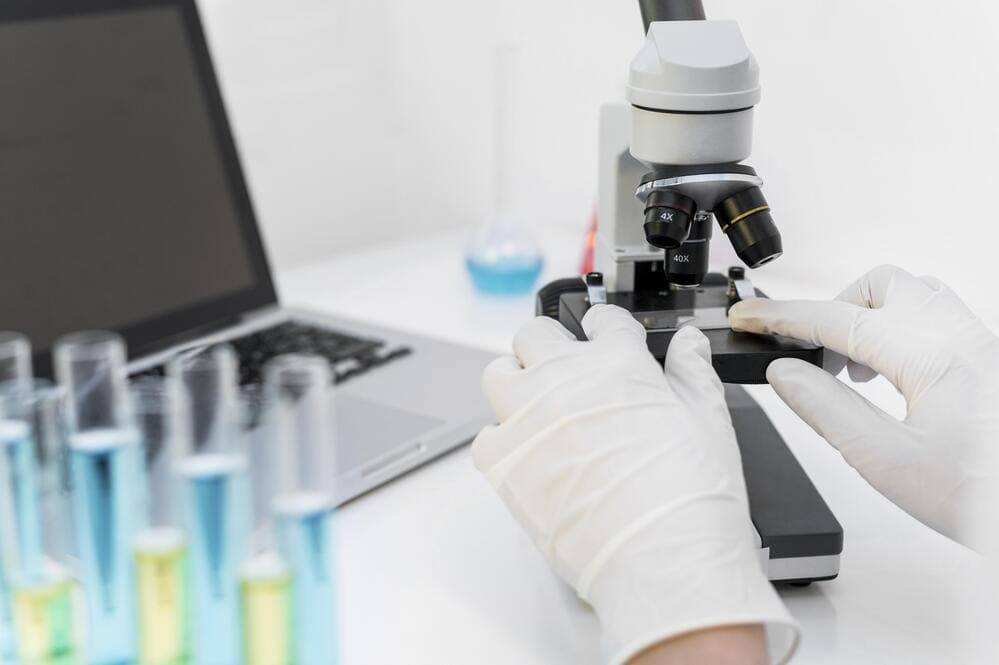
Ovarian rejuvenation with PRP (platelet-rich plasma) is an innovative technique that many fertility centers use to improve ovarian function in women with low ovarian reserve or premature ovarian insufficiency.
These promising results can increase your chances of success in an IVF treatment. However, choosing the right timing for the application is key. Here we clarify when to do it, how it works, and in which cases it is most effective.
What is ovarian rejuvenation with PRP and what is it for?
It involves injecting platelet-rich plasma — extracted from your own blood — directly into the ovaries. Its growth factors stimulate cellular regeneration, improving follicular activity and oocyte quality.
It is recommended in cases of:
- Low ovarian reserve.
- Premature ovarian insufficiency.
- Poor oocyte quality.
- Advanced maternal age in IVF.
- Repeated IVF failures.
Do not self-medicate: consult a reproductive specialist before deciding on any treatment.
When is the best time to perform ovarian rejuvenation with PRP during the IVF cycle?
There are three key phases:
1. 2–3 months before ovarian stimulation
Applying PRP with this lead time allows the growth factors to act on ovarian tissue to improve:
- Egg production.
- Oocyte quality and fertilization rates.
- Reduction of hormonal doses.
2. During ovarian stimulation
If the ovarian response is poor, some specialists apply PRP mid-cycle to:
- Improve the response in real time.
- Increase the number of mature oocytes.
Its effects may take time to manifest, so it is not always the ideal option.
3. After an embryo transfer failure
For those who have suffered implantation failure, PRP can improve endometrial receptivity:
- Enhances endometrial quality.
- Reduces uterine inflammation.
- Aids in cases of recurrent implantation.
How does ovarian rejuvenation with PRP work?
- Blood draw: 10–20 mL of venous blood.
- Processing: Centrifugation to isolate platelet-rich plasma.
- Ovarian injection: 2–4 mL of PRP in each ovary, guided by transvaginal ultrasound.
- Monitoring: Ultrasounds and hormonal tests to assess response.
This outpatient procedure is minimally invasive and allows you to resume your activities in less than 24 hours.
Who can benefit from ovarian rejuvenation with PRP?
- Low ovarian reserve (low AMH).
- Premature ovarian insufficiency (< 40 years).
- Women > 35 years with poor oocyte quality.
- Poor ovarian response in previous cycles.
- Recurrent implantation failure.
Although it does not guarantee success, studies and data from specialized centers show benefits, especially if performed before stimulation. For complementary techniques, learn about IVF MORE®: an innovative technique for oocyte restoration.
Final considerations
Ovarian rejuvenation with PRP is a promising tool that, when properly indicated and at the right time, can make a difference on your journey to parenthood. Every case is unique: always consult a reproductive specialist to design the most suitable plan for you.
Frequently Asked Questions
1. Is the PRP injection painful?
It is performed under light sedation or local anesthesia. Discomfort is mild and transient, like cramps, and usually subsides within 24–48 hours. Relative rest and mild analgesics are recommended if needed.
2. How long does it take to see the effect?
Growth factors begin to act immediately, but the most noticeable results appear at 2–3 months. That’s why it’s ideal to schedule it before ovarian stimulation.
3. Are there risks or side effects?
Being autologous, the risk of allergies is virtually nil. There may be local inflammation, infection (rare), or mild pain. It is essential to perform it in a sterile environment with qualified personnel.
4. Can I combine PRP with other IVF treatments?
Yes. PRP is usually used alongside standard stimulation protocols to enhance ovarian response and improve oocyte quality. Consult your specialist to design the best treatment plan.
Sources Consulted
- American Society for Reproductive Medicine. (2020). Platelet-rich plasma and ovarian rejuvenation. Fertility and Sterility, 113(2), 207–217.
- MedlinePlus. (2021). Infertility treatments. U.S. National Library of Medicine.
- Lee, J. et al. (2019). Autologous platelet-rich plasma for ovarian rejuvenation in women with poor ovarian response. Journal of Assisted Reproduction and Genetics, 36(8), 1673–1685.
- National Institutes of Health. (2022). Premature ovarian insufficiency. NIH.
We are with you every step of the way. If you have questions or need personalized guidance, turn to a reproductive assisted specialist: your desire to become a mother or father deserves the best care.